
Psychiatry Residency Policy Manual
Preface鈥擮ur Vision and Mission
91md传媒 Vision
Leading the creation and advancement of health equity by:
- Translating discovery into health equity
- Building bridges between health care and health
- Preparing future health learners and leaders
91md传媒 Mission
We exist to:
- Improve the health and well-being of individuals and communities;
- Increase the diversity of the health professional and scientific workforce
- Address primary health care needs through programs in education, research, and service, with emphasis on people of color and the underserved urban and rural populations in Georgia, the nation, and the world.
91md传媒 of Medicine (91md传媒) is like no other medical school in the country. We attract students who want to be great doctors, scientists, and healthcare professionals, and who want to make a lasting difference in their communities.
91md传媒 ranks number one in the first-ever study of all United States medical schools in the area of social mission. The ranking came as a result of 91md传媒鈥檚 focus on primary care and its mission to address the needs of underserved communities, a commitment that the study emphasizes is critical to improving overall healthcare in the United States. Such recognition underscores the vital role that 91md传媒 and other historically black academic health centers play in the nation鈥檚 healthcare system by addressing head-on the issues of diversity, access, and misdistribution.
Put simply, we attract and train the doctors and health professionals America needs most: those who will care for underserved communities; those who will add racial and ethnic diversity to the health professions and scientific workforce; those who will dedicate themselves to eliminating the racial, ethnic, and geographic health inequities that continue to plague the community and the nation.
Likewise, our researchers seek to understand not only the biological determinants of illness and health, but also the social determinants: the circumstances in which someone is born, lives, works, and ages. These circumstances can be shaped by diverse forces but can be just as powerful as physiology, if not more so, when it comes to health and wellness.
Graduate Medical Education (GME)
GME is an integral part of the 91md传媒 of Medicine (91md传媒) medical education continuum. Residency is an essential dimension of the medical student鈥檚 transformation into an independent practitioner along the continuum of medical education. It is physically, emotionally, and intellectually demanding, and requires a longitudinally concentrated effort on the part of the resident.
The five 91md传媒 residency education goals and objectives for residents are to:
- Obtain the clinical knowledge, competencies, and skills required for the effective treatment and management of patients;
- Prepare for licensure and specialty certification;
- Obtain the skills to become fully active participants within the United States healthcare system;
- Provide teaching and mentoring of 91md传媒 medical students and residents;
- Support in a direct way the school鈥檚 mission of providing service and support to disadvantaged communities.
Graduate Medical Education Institutional Aim
GME at 91md传媒 aims to train focused and well-balanced practitioners who will broaden the diversity in healthcare and scientific health workforce in order to eliminate health disparities and to advance health equity in urban and rural populations in Georgia, the nation, and throughout the world.
Graduate Medical Education Institutional Diversity Statement
GME at 91md传媒 recruits trainees from diverse backgrounds and perspectives and trains them to make a positive impact on healthcare while offering culturally competent and compassionate care. We strive to develop leaders who provide this culturally sensitive care to an inclusive patient population and who will develop innovative approaches to widen the pipeline for quality healthcare and promote the advancement of health equity.
Graduate Medical Education Institutional Welleness Statement
91md传媒 creates, nurtures, and sustains a diverse and inclusive culture and work environment in which all employees are encouraged to bring their best and authentic selves to work and are empowered to do so in support of creating and advancing health equity.
The Scope of This Manual
The Graduate Medical Education (GME) Policy Manual is an outline of the basic GME policies, practices, and procedures at 91md传媒 of Medicine (91md传媒 or School). The GME Policy Manual is intended only as an advisory guide. The term resident in this document refers to both specialty residents and subspecialty fellows.
This policy manual should not be construed as, and does not constitute, an offer of employment for any specific duration. This policy manual does not constitute an expressed or implied contract of employment for any period of time. Either 91md传媒 or an employee may terminate the employment relationship at any time with or without cause and with or without notice.
91md传媒 will attempt to keep the GME Policy Manual and its online version current, but there may be cases when a policy will change before this material can be revised online. Therefore, you are strongly urged to contact the GME Office to ensure that you have the latest version of 91md传媒鈥檚 policies.
Policy updates will be communicated to the 91md传媒 community via email and will be posted on the 91md传媒 internet site. 91md传媒 may add, revoke, suspend, or modify the policies as necessary at its sole discretion and without prior notice to employees. This right extends to both published and unpublished policies.
The 91md传媒 Policy Manual supersedes all prior GME Policy Manuals, policies, and employee handbooks of 91md传媒. The effective date of each policy indicates the current policy and practice in effect for the school.
 |
 |
 |
 |
Welcome from the GME Office!

Dear New and Continuing Residents and Fellows:
Welcome to the 2026-27 academic year of training! The Graduate Medical Office supports and provides oversight to all its ACGME-accredited residency and fellowship programs. As the Designated Institutional Official (DIO), I am committed to ensuring that our residents and fellows receive quality educational experiences and the necessary resources to successfully complete residency training.
91md传媒 GME provides a very competitive fringe benefits package to residents. Our resident stipend amounts rank above the 75th percentile nationally, and the benefits package includes excellent health coverage. Our programs provide vacation and sick leave benefits that are generous compared to other national training programs.
All 91md传媒 of Medicine residency and fellowship programs provide and pay for the following resources:
- Board review preparation for seniors
- Yearly book allowance
- Life support certification and recertification
- Marketing collateral-t-shirts, lunchboxes, coffee cups, etc.
- Paging system
- Resident/fellow travel to conferences
- Temporary state medical licenses
- White lab coats
As a previous program director, I enjoy interacting with residents and, in that interaction, strive to acquire resident input and feedback on improving our institution and programs. My expectations for 91md传媒 GME residents and fellows are that you:
- Dedicate yourself and your hard work to learning and providing top quality care to our patients;
- Contribute to, and be part of, solutions to improve and innovate our institution; and
- Advocate for the community.>
I look forward to working with you all in the upcoming year. Please feel free to contact the GME Office with questions or concerns.
Chinedu Ivonye, MD, FACP
Associate Dean of Graduate Medical Education
ACGME Designated Institutional Official
Message from the Program Director

Greetings!
Welcome to the Psychiatry Residency Program at 91md传媒 of Medicine (91md传媒). We are excited to have you as a member of our residency team. Our residency environment will provide you with the clinical case experience, didactic information, and confidence to enter the practice of general psychiatry as a competent, board-eligible physician.
Residency is much different than any previous training you may have experienced. You will learn the skills and didactic information that will enable you to diagnose and treat a diverse patient population with a wide variety of disorders. The skills you learn here will become the foundation of your medical career.
It should be your goal to acquire as much clinical experience in all areas as possible. You should develop a concentrated study program to ensure the steady accumulation of knowledge required to care for your patients.
In the following text, you will find suggestions for accomplishing your goal of becoming a competent, board-certified psychiatrist. In addition to general program information, this manual provides policies and procedures for the residency. The manual is updated with new information, schedules, and department rosters as they are made available. All goals and objectives are/will be uploaded into your rotation curriculum available online through MedHub. As always, we welcome your input, constructive criticism, and comments.
Deirdre Evans-Cosby, M.D.
Associate Professor
Residency Training Director
Assistant Medical Director, Grady Behavioral Health Outpatient Services
Welcome from the Resident Association
Welcome from the Resident Association
The 91md传媒 of Medicine (91md传媒) Resident Association (RA) is the representative body and voice for 91md传媒 residents. The RA works in collaboration with the leadership and administration of 91md传媒 Graduate Medical Education (GME) and its educational affiliates to ensure that residents are involved in providing input and feedback regarding decisions pertaining to residency education. The officers of the RA are available to residents as a resource in the informal concern and complaint process.
Membership in the RA is extended to all residents. These bylaws outline the structure and purpose of the association. Residents are encouraged to become involved in the 91md传媒 of Medicine Resident Association and to use it as a vehicle for communication regarding direct involvement in policy-making, institutional administration, and interdepartmental coordination.
Resident Association Mission
The mission of the Morehouse Resident Association is to be the voice of all residents. The RA advocates for 91md传媒 residents and strives to contribute to their well-being, the improvement of their learning environment, and foster a well-balanced residency experience through communal activities.
Bylaws of the 91md传媒 of Medicine Resident Association
Recognizing that the rendering of professional service to patients in accordance with the precepts of modern scientific medicine and the maintenance of the efficiency of the individual physician may best be served by coordinated action, the residents who are training at 91md传媒 of Medicine do hereby organize themselves into a Resident Association to provide such coordination in conformity with the following bylaws.
The name of this organization shall be the 鈥�91md传媒 of Medicine Resident Association鈥� (RA).
The 91md传媒 of Medicine Resident Association shall be composed of physicians who are interns and residents appointed by and currently under contract with Morehouse School of Medicine.
OFFICERS, COMMITTEES, AND RESPONSIBILITIES OF MEMBERS-AT-LARGE
Section 1: Officers
- The officers of the 91md传媒 of Medicine Resident Association shall be the President, the President-Elect, and the Secretary-Treasurer. The President shall call and preside at all meetings and shall be a member ex-officio of all committees. He or she shall represent the Association on the Graduate Medical Education Committee as a voting member. He or she shall have the authority to correspond and communicate resident concerns and to address confidential matters as necessary.
- The President-Elect, in the absence of the President, shall assume all his or her duties and shall have all his or her authority. He or she shall represent the Resident Association on the Graduate Medical Education Committee as a voting member. He or she shall have the authority to correspond and communicate resident concerns, and to address confidential matters as necessary.
- The Secretary-Treasurer shall keep accurate records of all meetings, call meetings on behalf of the President, and perform such duties as ordinarily pertain to his or her office. The Secretary-Treasurer shall take direction from the President, President-Elect, and the Executive Committee. He or she shall act as Treasurer of the 91md传媒 of Medicine Resident Association when necessary.
Voting of Officers
The President-Elect and Secretary-Treasurer shall be elected annually during the orientation
of returning residents by all current residents in good standing from all Morehouse
School of Medicine Residency Programs. The previous year鈥檚 President-Elect shall serve
as the President of the Executive Committee thus serving the second year of his or
her term.
Section 2: Committees
- Resident Association Executive Committee鈥擳he 91md传媒 of Medicine Resident Association shall have an Executive Committee. The membership of the Executive Committee shall consist of the President, President-Elect, and Secretary-Treasurer.
- Resident Association Council鈥擳he 91md传媒 of Medicine Resident Association shall have a Council. The membership of the RA Council shall consist of at least two (2) members at large representing each residency program: Family Medicine, Internal Medicine, Obstetrics and Gynecology, Pediatrics, Preventative Medicine, Psychiatry, and Surgery.
- Members-at-Large鈥擳hese members must be peer-selected on an annual basis with one resident designated as the RA voting representative of the Executive Committee, therefore ensuring one vote per program.
- Ex-Officio Members鈥擳he President, President-Elect, and Secretary-Treasurer of the Resident Association shall be ex-officio members of the RA Council.
- Standing and Special Committees of the Resident Association鈥擜ll committee representatives shall be appointed by the President. Standing committees shall be appointed for one year. Special committees shall retain their appointments until discharged by the President. Committees shall be reconstituted annually. Appointed representatives to committees are responsible for providing a brief written summary to the RA Officers within seven (7) days of attending a committee meeting.
Standing Committees:
Representatives from the Resident Association membership shall be appointed by the
President to sit as members on the following committees as requested by 91md传媒 and hospital
affiliates and as deemed necessary by the Resident Association:
- Grady Memorial Hospital (GMH) Patient Safety and Quality Improvement Committees as requested by GMH and GME leadership
- GMEC Patient Safety and Quality Improvement Subcommittee
- GME special annual committees requesting a resident representative that include but are not limited to:
- Graduation
- Recruitment
- New Resident Onboarding
- Resident Orientation
- Special Reviews of Programs
The RA President-Elect and Secretary shall keep an annual committee list of resident appointments.
Section 3: Responsibilities of Members-at-Large (MaL)
Members-at-large are responsible for representing the residents of their program and communicating information from the RA council meetings. Additional responsibilities of a MaL are to attend quarterly RA Council meetings and participate as a member on at least one institution/hospital committee as requested/appointed by the RA President.
MEETINGS
Section 1: Regular Meetings鈥擱A Council
Regular meetings of the RA Council shall be held at least quarterly, with the exception of July, or at the discretion of the President of the RA. All members-at-large will be notified at least one month in advance. All meetings shall be open to any member of the Resident Association unless otherwise specified.
Section 2: Special Meetings鈥擡xecutive Committee
- Special meetings of the Executive Committee or of the Resident Association Council may be called at any time by the President of the Resident Association.
- The Director of Graduate Medical Education shall be invited to regular Executive Committee and RA Council meetings in an advisory capacity and shall be excused from such meetings, if necessary, when residents choose to discuss confidential RA matters.
Section 3: Quorum
Any five members of the RA Council present at any given meeting shall constitute a quorum. All officers must be present at Executive Committee meetings for a quorum.
Section 4: Meeting Agendas
- The agenda at any regular RA Council meeting shall be:
- Call to order
- Reading of the minutes of the last regular and all special meetings
- Unfinished business
- Communications
- Reports, as indicated, from representatives of standing and special committees
- New business
- Adjournment
- The agenda at special (Executive Committee) meetings shall be:
- Reading the notice calling the meeting
- Discussion of the business for which the meeting was called
AMENDMENTS
Amendments to these bylaws shall be proposed by resolution at a regular meeting of the Executive Committee. Proposed amendments shall be voted on at a scheduled meeting of the Resident Association Council and shall require a two-thirds majority of those present and voting for adoption. A copy of the resolution shall be transmitted in writing to all members of the Resident Association 30 days prior to such a meeting.
ADOPTION
These bylaws will be voted on and must be approved by a majority vote of all active residents who are in good standing with their programs.
General Information for Faculty Members
The Graduate Medical Education Committee (GMEC) highly values the contributions of our faculty members. The GMEC agrees with, supports, and adheres to the ACGME requirements and standards as related to faculty members as follows (reference: ):
Faculty members are a foundational element of graduate medical education鈥攆aculty members teach residents/fellows how to care for patients. Faculty members provide an important bridge allowing residents/fellows to grow and become practice-ready, ensuring that patients receive the highest quality of care. They are role models for future generations of physicians by demonstrating compassion, commitment to excellence in teaching and patient care, professionalism, and a dedication to lifelong learning. Faculty members experience the pride and joy of fostering the growth and development of future colleagues. The care they provide is enhanced by the opportunity to teach.
By employing a scholarly approach to patient care, faculty members, through the graduate medical education system, improve the health of the individual and the population. Faculty members ensure that patients receive the level of care expected from a specialist in the field. They recognize and respond to the needs of the patients, residents/fellows, community, and institution. Faculty members provide appropriate levels of supervision to promote patient safety. Faculty members create an effective learning environment by acting in a professional manner and attending to the well-being of the residents, fellows, and themselves.
Per Section II.B. of the ACGME Common Program Requirements
At each participating site, there must be a sufficient number of faculty members with
the competence to instruct and supervise all residents/fellows at that location.
Responsibilities of Faculty Members
Faculty members must:
- Be role models of professionalism.
- Demonstrate commitment to the delivery of safe, quality, cost-effective, patient-centered care.
- Demonstrate a strong interest in the education of residents/fellows.
- Devote sufficient time to the educational program to fulfill their supervisory and teaching responsibilities.
- Administer and maintain an educational environment conducive to educating residents/fellows.
- Participate regularly in organized clinical discussions, rounds, journal clubs, and conferences.
- Pursue faculty development designed to enhance their skills at least annually
- As educators,
- In quality improvement and patient safety,
- In fostering their own well-being and that of their residents/fellows, and
- Inpatient care based on their practice-based learning and improvement efforts.
Faculty Qualifications
Faculty members must:
- Have appropriate qualifications in their field and hold appropriate institutional appointments;
- Have current certification by the American Board of the specific specialty or the American Osteopathic Board of the specific specialty, or possess qualifications judged acceptable to the Review Committee; and;
- Possess current medical licensure and appropriate medical staff appointment.
Core faculty members must:
- Be designated by the program director;
- Have a significant role in the education and supervision of residents/fellows;
- Devote a significant portion of their entire effort to resident education and/or administration;
- Teach, evaluate, and provide formative feedback to residents/fellows as a component of their activities; and
- Complete the annual ACGME Faculty Survey.
Any non-physician faculty members who participate in residency/fellowship program education must be approved by the program director.
Evaluation of the Faculty
The program will evaluate each Faculty member鈥檚 performance as it relates to the educational
program annually. The evaluation will include a review of the Faculty member鈥檚 clinical
teaching abilities, engagement with the educational program, participation in faculty
development related to their skills as an educator, professionalism, and scholarly
activities. This evaluation will include written, anonymous, and confidential evaluations
by the resident.
Levels of Supervision:
To promote appropriate resident supervision while providing for graded authority and
responsibility, the program utilizes the following classifications in accordance with
ACGME guidelines:
Direct Supervision: the supervising physician is physically present with the resident during key portions of the patient interaction or supervising physician and/or patient is not physically present with the resident and the supervising physician is concurrently monitoring the patient care through appropriate telecommunication technology. PGY-1 residents must initially be supervised directly and progress to being supervised indirectly with direct supervision available after demonstrating competence in the ability and willingness to ask for help when indicated, gathering appropriate history, ability to perform an emergent psychiatric assessment, and presenting findings and data accurately to a supervisor who has not seen the patient.
Indirect Supervision: the supervising physician is not providing concurrent visual or audio supervision but is immediately available to the resident for guidance and is available to provide appropriate direct supervision.
Oversight: the supervising physician is available to provide a review of procedures/encounters with feedback provided aftercare is delivered.
General Information for Residents and Fellows
Access to Information
- Each resident shall be provided with the right to access 91md传媒 and affiliate policies, procedures, medical staff bylaws, quality assurance requirements, and personal educational information.
- Each resident shall have access to the internet and information retrieval sites through residency program computers, limited access from home computers (upon request), or from the 91md传媒 library system.
- Residents are briefed and tested regarding their responsibility to maintain patient confidentially as guided by HIPAA regulations established in April 2003 and by 91md传媒 compliance requirements.
Compensation
- 91md传媒 of Medicine (91md传媒) compensates residents directly. The Graduate Medical Education Committee (GMEC) annually develops and recommends annual stipend (salary) amounts for each PGY level.
- The stipend scale allows residents to receive an increase in compensation for each graduated education level.
- An individual assigned as a chief resident will receive a higher stipend amount for his or her administrative duties.
Eligibility for Specialty Board Examination
Each resident should become familiar with the requirements of her or his specialty board as listed on the American Board of Medical Specialties (ABMS) website or on the individual specialty website. The resident鈥檚 program administration representative can assist in finding this information.
Email Requirement
All residents are required to utilize 91md传媒 of Medicine email addresses for all business and educational email communication. 91md传媒 email addresses are provided/assigned at the beginning of residency training.
Exposures to Blood, Body Fluids, and Biohazardous Materials
- Workers鈥� Compensation Insurance provides compensation and/or medical care for workers who are injured or become ill as a direct result of their job. Coverage begins on the resident鈥檚 first day of employment.
- In addition to contacting the required person(s) at the hospital/site, residents must also contact Ms. Arlene Godfrey, 91md传媒 Human Resources, Employee Relations, Clinical Services at (404) 752-1964 and agodfrey@msm.edu for all work-related injuries and/or exposures including: blood, body fluids, needle sticks, and biohazardous exposures.
- Prior to evaluation and/or treatment, residents MUST be assigned a Workers鈥� Compensation number and choose from an 91md传媒 Panel of Healthcare Providers. For additional information, refer to 91md传媒鈥檚 Workers鈥� Compensation Policy (HR 6.03).
Fringe Benefits and Resources for Residents/Fellows
- Benefits: In addition to salary, 91md传媒 of Medicine offers residents and their eligible dependents health insurance benefits. Residents are also provided disability insurance benefits, confidential counseling and psychological services, vacation, parental, sick or other leave with coverage starting the first recognized day of the training program. These offerings are uniform for all residents and administered by 91md传媒 Human Resources in accordance with the vendor programs and/or policies in force at the time of this agreement. Detailed information on fringe benefits for residents can be provided by the 91md传媒 Human Resources Department at (404) 752-1600 or benefits@msm.edu. Residents/fellows can also log in to .
- Counseling: Short term counseling is available from 91md传媒 Counseling Services, (404)-752-1607.
- Cigna Employee Assistance Program (EAP), CARE 24/7/365: This benefit is available for residents as a self-referral or for family assistance. Residents are briefed on these programs by the Human Resources Department during in-coming orientation. Residents are briefed annually on the Drug Awareness Program, resident impairment issues, and family counseling. More information regarding these programs is available in the Human Resources Department at (404)-752-1600, or by calling Cigna EAP directly at (877) 622-4327 and online at using the employer ID: 91md传媒 as the login.
- Equipment: iPhones, iPads, and/or laptops must be returned by residents who do not complete their program.
- Laboratory (White) Coats: Clinical laboratory coats are provided to residents free of charge but are subject to the requirements of 91md传媒 and the rules of the affiliates.
- Leave: As addressed in the resident/fellow leave policy, residents/fellows are cautioned that to fulfill the program requirements and that of the specialty certification board, it may be necessary for the resident to spend additional time in the program to make up for time lost when utilizing the various leave options.
- Resident/Fellow Vacation Leave: Residents are allotted 15 days of compensated leave per academic year (from July through June). Vacation leave is not accrued from year to year. Each residency program is responsible for the administration of residents鈥� leave to include scheduling, tracking, approving, and reporting leave to the department, GME, and the 91md传媒-Human Resources Department. Vacation blocks shall be designed within the structure of the residency program schedules.
- Resident/Fellow Sick Leave: Compensated sick leave is 20 days per year. This time can be taken for illness, injury, and medical appointments for the resident or for the care of an immediate family member. Sick leave is not accrued from year to year. A combination of sick leave and vacation leave may be used to care for oneself or an immediate family member. When these two leave categories are exhausted, any additional leave will be uncompensated (residents should also refer to the program-specific Resident Leave Policy).
- Family and Medical Leave Act (FMLA): Program requirements and specifications of the program specialty board apply to the time required to make up absences. For guidance and questions about FMLA, all residents and fellows should contact Marla Thompson in the Human Resources Department (HRD) and the Office of Disability Services and Leave Management at (404) 752-1871 or at ods@msm.edu
- Leave of Absence Without Pay (LWOP): When possible, requests for leaves of absence without pay shall be submitted by residents in writing to the residency program director for disposition far in advance of any planned leave. All requests shall identify the reason for the leave and its duration. Residents/fellows should discuss with the program director the impact of the leave on a possible delay in program completion. The 91md传媒-Human Resources Department shall determine the feasibility and all applicable criteria prior to a resident/fellow being granted LWOP and shall advise both the resident and the corresponding residency/fellowship program regarding details and procedures.
- Other Leave Types: All leave types are explained in detail in the 91md传媒 of Medicine Human Resource Policy Manual and made available by contacting Marla Thompson at (404) 752-1871.
- Library Services and Multimedia Services: These services are available at 91md传媒 of Medicine to include electronic media search access. Libraries are available at inpatient facilities but vary in the content and services available. Ambulatory care facilities have limited libraries. All residents/fellows have online search access capability through the 91md传媒 network.
- Nepotism Policy (See 91md传媒 Human Resources Policy 2.04): 91md传媒 permits the employment and/or enrollment for academic purposes of qualified relatives of employees as long as such employment or academic pursuit does not, in the opinion of the school, create actual conflicts of interest. The 91md传媒 Human Resources Nepotism policy states:
- No direct reporting or supervisor-to-subordinate relationship may exist between individuals who are related by blood or marriage, or who reside in the same household.
- For academic purposes, no direct teaching or instructor-to-resident/fellow or instructor-to-student relationship can exist. No employee is permitted to work within 鈥渢he chain of command鈥� when one relative鈥檚 work responsibilities, salary, hours, career progress, benefits, or other terms and conditions of employment could be influenced by the other relative.
- Each employee, student, or resident/fellow has a responsibility to keep his/her supervisor, the appropriate Associate Dean or Residency/Fellowship Program Director and Human Resources informed of changes relevant to this policy.
- Office of Disability Services: For information regarding disabilities, contact Marla Thompson at (404) 756-1871 or at ods@msm.edu.
- Parking Facilities: Parking is available at each clinical affiliate and may require payment of a reasonable fee.
Program Overview
Program Mission
Our mission is to train psychiatric residents to provide excellent and quality healthcare
to all, especially the underserved. The Psychiatry Residency Program is designed to
provide a comprehensive learning experience that prepares psychiatrists to meet the
demands of contemporary psychiatric practice. Emphasis is placed on the development
of psychiatrists who have acquired their knowledge, skills, and competencies predominantly
through community-based learning experiences.
This is a novel approach because our residents gain a significant amount of experience in the community as opposed to traditional residency programs that may focus more on the hospital environment. The program allows residents the opportunity to explore the many facets of psychiatric care in the 21st century. Atlanta is a multicultural city with a variety of people from different races and ethnicities, and the program benefits from this diversity. Residents benefit from a variety of patient experiences, whether patients are from the inner city, suburbia, foreign countries, or rural areas.
Graduates of the 91md传媒 Psychiatry Residency Program, while expected to become excellent clinicians, are equipped to adapt to the rapidly evolving dynamics of healthcare.
Residency Setting
Our program hospital partners include:
- Atlanta VA Medical Center (VA)
- East Point CBOC (branch of Atlanta VA)
- Families First
- Georgia Regional Hospital (GRH)
- Grady Health System (GHS)
- Tanner Hospital - Willowbrooke
In addition, we have a host of private and public-sector partners for our outpatient rotations.
Administrative Structure
The following sections describe the roles and responsibilities of the members of our
administration.
Program Director
The program director provides the overall leadership, development, and implementation
of the residency program. The program director ensures that the program is compliant
with all requirements of the Accreditation Council for Graduate Medical Education
(ACGME) for a psychiatry residency training program. The program director is responsible
for residents鈥� progression through their experiences in and graduation from the program.
The program director tracks and reviews all resident evaluations, patient logs, and
duty hours to ensure overall resident and program compliance.
Other responsibilities of the program director include:
- Overseeing all aspects of the residency program and resident education
- Creating and maintaining the affiliation agreements and alliances with the necessary educational and clinical entities, hospitals, clinics, and individual physicians to provide the highest quality training opportunities in the field of psychiatry
- Updating and modifying educational goals and curricula
- Overseeing and approving topics for lectures and instruction as deemed fit by the program and the emerging guidelines of the Residency Review Committee (RRC) and the American Board of Psychiatry and Neurology
- Directly supervising the program manager and the core psychiatry faculty and staff involved with the residency program implementation
- Working closely with the department鈥檚 chairperson and other officials at 91md传媒 to ensure that the program reflects the mission of the institution as well as of the department
- Overseeing the resident selection and promotion process
Asscociate Program Director
The associate program director is responsible to:
- Support the training director and program manager with administrative duties within the Psychiatry Residency Program.
- Review program policies
- Review rotation and didactic goals and objectives.
- Assist with six (6) month resident performance reviews
- Assist the chief resident in developing the Wednesday Academic Activity Schedule, inclusive of case conferences, Journal Club, and Grand Rounds
- Encourage, monitor, and assist residents in identifying and participating in appropriate scholarly activities
- Attend the Residency Training Committee meetings each month
- Assist the Psychiatry Program with recruitment and active participation in the interview process of applicants for the residency program
Chief Resident
The chief resident supports resident teaching activities such as Grand Rounds, weekly
didactics, Journal Club, and Clinical Case Conferences. The chief resident supervises
the development and modification of resident schedules, including vacation requests
and arranging backup coverage for unplanned absences. The chief resident attends Residency
Training Committee meetings of the department and serves as the resident liaison.
A new chief resident is either appointed for each academic year from the graduating
class (or PGY-3 class if no graduate is selected). Interested candidates are encouraged
to contact the program director as early as possible for consideration.
The chief resident is responsible to:
- Set and maintain the standard of professional conduct for the entire program.
- Support the training director, associate training director, and program manager with administrative duties within the Psychiatry Residency Program.
- Develop the Wednesday Academic Activity schedule, inclusive of case conferences, journal club, and Grand Rounds.
- Act as the liaison between the residency and the program manager, training director, associate training director, and Program Evaluation Committee with regard to policies and procedures within the program.
- Support and enact the policies and procedures of the Psychiatry Residency Program, the 91md传媒 system, and the ACGME to ensure that residents are fulfilling ACGME competencies and so, ensure continued accreditation as well as the success of the program.
- Attend the Program Evaluation Committee (PEC) meeting, the third Wednesday bi-monthly meeting, and the Administrative Supervision biweekly meeting with the training director and/or associate training director.
- Conduct monthly resident meetings to assess resident progress, needs, and concerns.
- Provide an avenue of communication for an educational environment in which interns and residents may raise and resolve issues without fear of intimidation or retaliation.
- Assist with orientation of the interns to ensure continuity of service and care for all Psychiatry patients. Assist residents with transitions to the next clinical sites.
- Ensure that the upper-level residents are helping in the education of medical students and lower level residents within the Psychiatry Department and on rotations of the clinical services system.
- Assist the VA chief in the completion of the call schedule for Morehouse residents and interns.
- Provide the training director and program manager with the monthly call schedule every six (6) months.
- Assist the Psychiatry Program with recruitment and active participation in the interview process of applicants for the residency program.
- Lead the peer selection process of Resident Association (RA) members at large according to the Resident Association bylaws and stated deadlines.
- Assist the Resident Association by selecting members at large to represent the program, and residents as members to institutional and hospital committees as requested by the Graduate Medical Education Committee.
- Serve, potentially, as the 91md传媒 resident member for GPPA.
- Provide relevant didactic lectures to interns and medical students.
The chief resident is also responsible for the following duties specific to the VA:
- Share responsibility with Emory chief to complete and tend to call schedules and vacation requests for Emory and Morehouse interns, residents, and medical students.
- Share responsibility with the Emory chief for the orientation of residents and students (computer codes, unit orientation with CPRS note formats, obtaining keys, photo IDs, etc.).
- Share responsibility with Emory chief to be available to residents after hours, by pager, for any on-call clinical issues
- Track and address vacation and call swaps.
- Serve as mutual back-up for the co-chief during absences.
- Share in teaching duties, including attending team meetings for 91md传媒 interns, and teaching for 91md传媒 interns separately, about clinical information-gathering and clinical basics.
- Assist with student orientation.
Program Manager
The program manager administers the daily operational activities of the residency
program and interacts with various personnel at affiliated institutions as needed.
The program manager ensures that the residents complete all required paperwork and
obtains their evaluations. The program manager also ensures that residents鈥� master
files, evaluations, immunization certificates, visa documents, and United States Medical
Licensing Examination (USMLE) scores are kept up to date.
The program manager is responsible to complete and file all required paperwork and communications from internal and external entities (e.g., 91md传媒 Graduate Medical Examination [GME] office, American Board of Psychiatry and Neurology, American Psychiatric Association). In conjunction with the program director, the program manager coordinates the resident recruitment activities.
Program Coordinator
The program assistant provides administrative support to the program director, associate
program director, and the residency program manager. The residency program assistant
provides professional and prompt completion of data entry, expense requests, travel
support, program documentation, and meeting logistics.
ACGME Specialty Review Committees
CCC
A Clinical Competency Committee must be appointed by the program director.(Core) At a minimum, the Clinical Competency Committee must include three members of the
program faculty, at least one of whom is a core faculty member.(Core) Additional members must be faculty members from the same program or other programs,
or other health professionals who have extensive contact and experience with the program鈥檚
residents.
The Clinical Competency Committee must:
Review all resident evaluations at least semi-annually;(Core)
Determine each resident鈥檚 progress on achievement of the specialty-specific Milestones;
and,(Core)
Meet prior to the residents鈥� semi-annual evaluations and advise the program director
regarding each resident鈥檚 progress.
PEC
The program director must appoint the Program Evaluation Committee to conduct and
document the Annual Program Evaluation as part of the program鈥檚 continuous improvement
process. The Program Evaluation Committee must be composed of at least two program
faculty members, at least one of whom is a core faculty member, and at least one resident.
Program Evaluation Committee responsibilities must include:
Acting as an advisor to the program director, through program oversight review of
the program鈥檚 self-determined goals and progress toward meeting them guiding ongoing
program improvement, including the development of new goals, based upon outcomes review
of the current operating environment to identify strengths, challenges, opportunities,
and threats as relat颅ed to the program鈥檚 mission and aims.
Psychiatry Residency Program Personnel
Psychiatry Residents 2026-2027
| PGY-1 | ||||
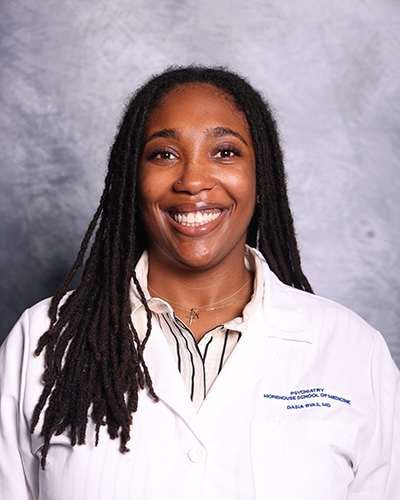 Dr. Dasia Byas (Gossett) 07/01/2026-06/30/2030 dbyas@msm.edu |
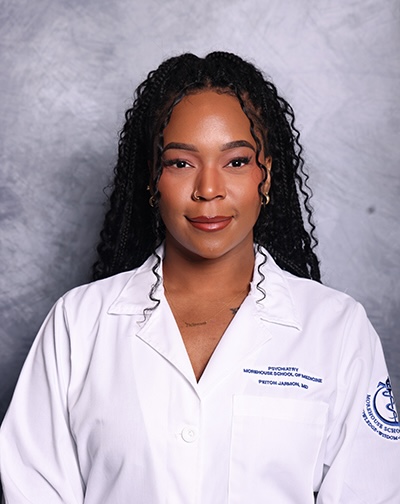 Dr. Peiton Jarmon 07/01/2026-06/30/2030 pjarmon@msm.edu |
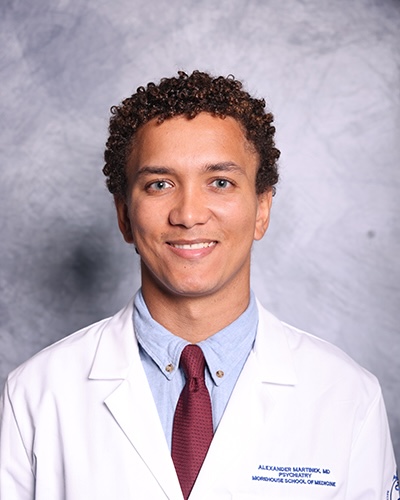 Dr. Alexander Martinek 07/01/2026-06/30/2030 amartinek@msm.edu |
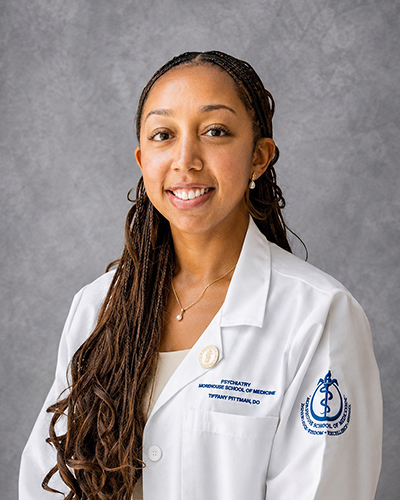 Dr. Tiffany Pittman 07/01/2026-06/30/2030 tipittman@msm.edu |
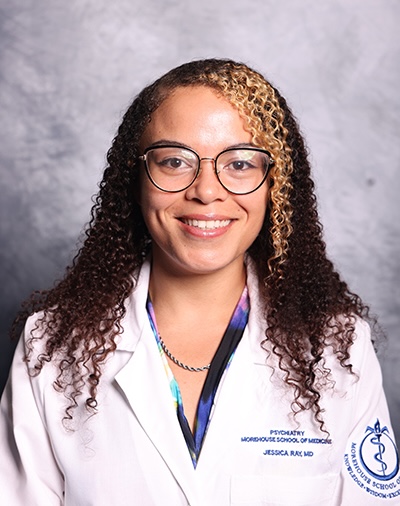 Dr. Jessica Ray 07/01/2026-06/30/2030 jeray@msm.edu |
| PGY-2 | ||||
 Dr. Yailee Bangura 07/01/2025-06/30/2029 ybangura@msm.edu |
 Dr. Lindsay Gaston 07/01/2025-06/30/2029 lgaston@msm.edu |
 Dr. Eden Obomeghie 07/01/2025-06/30/2029 eobomeghie@msm.edu |
 Dr. Miles Simms 07/01/2025-06/30/2029 msimms@msm.edu |
 Dr. Haeyoung Won 07/01/2025-06/30/2029 hawon@msm.edu |
| PGY-3 | ||||
 Dr. Naima Bakari 07/01/2024-06/30/2028 nbakari@msm.edu |
 Dr. Jason Iyobhebhe 07/01/2024-06/30/2028 jiyobhebhe@msm.edu |
 Dr. Chanera Philogene 07/01/2024-06/30/2028 cphilogene@msm.edu |
 Dr. Wahenoor Singh 07/01/2024-06/30/2028 wsingh@msm.edu |
 Dr. Donald White 07/01/2024-06/30/2028 dawhite@msm.edu |
| PGY-4 | ||||
 Dr. Eugenia Asare 07/01/2023-06/30/2027 easare@msm.edu |
 Dr. Victor Elensi 07/01/2025-06/30/2027 velensi@msm.edu |
 Dr. Paolo Gilleran 07/01/2025-06/30/2027 pgilleran@msm.edu |
 Dr. Kiyana Harris 07/01/2025-06/30/2027 kharris@msm.edu |
 Dr. Terrance C. Jenkins 07/01/2025-06/30/2027 tcjenkins@msm.edu</a |
| Program Administration | ||||
| Program Director Deirdre Evans-Cosby, MD 91md传媒: (404) 756-1452 Grady: (404) 616-0355 decosby@msm.edu |
Associate Program Director Kristian Jones, MD krjones@msm.edu |
Associate Program Director Sheril Kalarithara, MD 91md传媒: (404) 756-1281 skalarithara@msm.edu |
||
| Program Manager Kennyna Landing 91md传媒: (404) 756-1445 klanding@msm.edu |
Program Coordinator Kristopher Goodlow 91md传媒: (404) 756-5035 krgoodlow@msm.edu |
|||
91md传媒 of Medicine Department of Psychiatry
Locations
|
80 Jesse Hill Jr. Drive SE P.O. Box 26238 Atlanta, GA 30303 (404) 616-4743 |
||
| Park Place PSR Attending Farzana Bharmal, MD Pager: (404) 837-0737 fbharmal@msm.edu |
IDP Attending Nicole Cotton, MD ncotton@msm.edu |
Vice Chief of Service C/L John Gaston, MD Pager: (404) 616 2882 jgaston@msm.edu |
| Grady PES Attending Jennifer Grant, MD, PhD jgrant2@emory.edu |
Grady Psych OB Attending Kamille Williams, MD kwilliams@msm.edu |
Grady Intake Attending Nida Virani Qureshi, MD nviraniqureshi@msm.edu |
| Park Place Suboxone Attending Alaina Steck, MD alaina.steck@emory.edu |
Grady ACT Attending Deirdre Evans-Cosby, MD decosby@msm.edu |
Grady Clozaril Attending Robert Cotes, MD robert.o.cotes@emory.edu |
|
3073 Panthersville Road Decatur, GA 30034 (404) 243-2100 |
||
| Clinical Director Delquiz Mendoza, MD Phone: (404) 201-5031 dmendoza@dbhdd.ga.gov |
Assistant to the Clinical Director Charqueis Coleman Charqueis.Coleman@dbhdd.ga.gov |
Attending Supervisor Abioudun Famakinwa, MD Phone: (410) 258-6550 Abioudun.Famakinwa@dbhdd.ga.gov |
| Attending Forensic Unit Lauren Cheatham, MD lauren.chatham1@dbhdd.ga.gov |
Attending Supervisor Kwaku Yeboah, MD kwaku.yeboah@dbhdd.ga.gov |
Attending Supervisor Alicia Lindsay, MD Alicia.Lindsay@dbhdd.ga.gov |
| Veteran's Affair Police and Security | ||
| CPRS Training Deborah Skarda Room 6C150 Phone: (404) 321-6111 ext. 2413 deborah.skarda@va.gov |
ADPAC/Admin Personnel Keely Evans Phone: (404) 321-6111 ext. 204105 keely.evans@va.gov |
PIV Office 1670 Clairmont Rd. 3rd Floor, 3A-124 Decatur, GA 30033 Phone: (404) 321-6111 Ext. 206318 or 207865 |
| PGY-1 | ||
| Atlanta VA Attending Ajitabj Pandey, MD Office: (404) 321-6111 ext. 3848 Pager: (404) 2252431 ajitabh.pandey@va.gov |
Atlanta VA Attending Erica Duncan, MD Office: (404) 321-6111 ext. 7532 erica.duncan@va.gov |
Atlanta VA Attending Ravi Telakapalli, MD ravi.telakapalli@va.gov |
| Atlanta VA Attending David Novasad, MD Pager: (404) 225-2431 david.novasad@va.gov |
Atlanta VA Attending Troy Kapral, MD Cell: (404) 668-7241 troy.kapral@va.gov |
Atlanta VA Attending Viorica Pencea, MD vpencea@emory.edu |
| AY2027 VA Chief Stephanie Liu-Lam, MD stephanie.lam@emory.edu |
AY2027 VA Chief Tyler Perry, MD, MPH tyler.harrison.perry@emory.edu |
|
| PGY-2 | ||
| Supervisor PSR Attending Park Place PGY-2 Site Erica Lee, PhD Edlee@emory.edu |
IDP Attending Nicole Cotton, MD ncotton@msm.edu |
Families First Attending Danae Evans, MD danevans@msm.edu |
| ACT Supervisor Deirdre Evans-Cosby, MD decosby@msm.edu |
Psych OB Attending Kamille Williams, MD kwilliams@msm.edu |
Intake Attending Nida Virani Qureshi, MD nviraniqureshi@msm.edu |
| Suboxone Attending Alaina Steck, MD alaina.steck@emory.edu |
Clozaril Clinic Supervisor Robert Cotes MD robert.o.cotes@emory.edu |
|
| PGY-3 | ||
| Vice Chief of Service C/L Attending John O. Gaston, MD Cell: (404) 616-2882 jgaston@msm.edu |
Atlanta VA Medical Center SATP Attending Christopher Rashad Smith, MD Christopher.Smith2020@va.gov |
Grady Psychiatry Emergency Room Jennifer Grant, MD jgrant2@emory.edu |
| Georgia Regional Hospital Clinical Director Delquiz Mendoza, MD Phone: (404) 201-5031 dmendoza@dbhdd.ga.gov |
Georgia Regional Hospital Assistant to the Clinical Director Charqueis Coleman Charqueis.Coleman@dbhdd.ga.gov |
Georgia Regional Hospital East Unit Attending Abioudun Famakinwa, MD Phone: (410) 258-6550 Abioudun.Famakinwa@dbhdd.ga.gov |
| Georgia Regional Hospital Forensic Unit Attending Lauren Chatham, MD lauren.chatham1@dbhdd.ga.gov |
Georgia Regional Hospital Admission Attending Alicia Lindsay,&nbps;MD Alicia.Lindsay@dbhdd.ga.gov |
Tanner at Willobrooke Site Supervisor Kenneth Genova, MD kgenova@tanner.org |
| PGY-4 | |
| Atlanta VA Medical Center Medical Director, GHM-South Kristine McDaniel, MD Fort McPherson Clinic Cell: (404) 321-6111 Ext. 1624 kristine.mcdaniel@va.gov |
Atlanta VA Medical Center CBOC Attending Sheril Kalarithara, MD Fort McPherson Clinic sheril.kalarithara@va.gov |
| Graduate Medical Education | ||
| Senior Associate Dean/ Designated Institutional Official Chinedu Ivonye, MD, FACP civonye@msm.edu |
Associate Dean Graduate Medical Education Riba Kelsey, MD, FAAFP rkelsey@msm.edu |
Executive Director Graduate Medical Education Susan Ratliff, MBA, C-TAGME sratliff@msm.edu |
| Graduate Medical Education Associate Director Tiffany Burns tburns@msm.edu |
Institutional Program Manager Yvonne Gilbert, MPH, C-TAGME ygilbert@msm.edu |
Data Management Specialist Felicia Underwood funderwood@msm.edu |
| GME Assistant to the Designated Institutional Official Yvonne Jones yvojones@msm.edu |
||
| Family Medicine Department 50 Hurt Plaze SE 15th Floor Atlanta, GA 30303 Main: (404) 756-1230 Fax: (404) 756-1229 |
|
| Grady East Point Attending Macy McNair, MD Office: (404) 616-2886 MMcNair@msm.edu |
Hurt Building Program Manager Rita Akiyode, MPA, M.Ed. Office: (404) 756-1256 rakiyode@msm.edu |
| Internal Medicine Department 50 Hurt Plaze SE 15th Floor Atlanta, GA 30303 Main: (404) 756-1325 Fax: (404) 756-1229 |
||
| Grady Chief Theodora C. Esomonye, MBBS tesomonye@msm.edu |
Grady Chief Nicole Delgado, MD nicole.kimberly.delgado@emory.edu |
Grady Chief Theodora C. Esomonye, MBBS tesomonye@msm.edu |
| Human Resources Office 720 Westview Drive SW Atlanta, GA 30310 Main: (404) 752-1600 Fax: (404) 752-1639 |
Payroll Office 720 Westview Drive SW Atlanta, GA 30310 Main: (404) 752-1669 Fax: (404) 752-1791 |
||||
| Benefits Benefits Specialist Charlene Rowe crowe@msm.edu |
Compensation Compensation Manager Latoya Small lsmall@msm.edu |
Human Resources HR Business Partner Sherri Hughes-Williams shugheswilliams@msm.edu |
|||
| Information Technology 720 Westview Drive SW Atlanta, GA 30310 Main: (404) 752-1111 |
General Information
Certifications
Residents are required to be certified in Advanced Cardiac Life Support (ACLS) and
Basic Life Support (BLS) throughout their residency. Residents must apply for a National
Provider Identifier number (NPI) and use this number for writing prescriptions. As
a rising PGY-3 resident, GME will cover the cost to recertify.
Leave Information and Availability
Residents are expected to perform their duties as resident physicians for a minimum
of 11 months each calendar training year. Absences from the training program for vacation,
illnesses, or personal business must not exceed a combined total of four (4) weeks
per academic year, or additional time will be extended onto the residency.
For successful completion of the program in time for board eligibility in July following graduation, the American Board of Psychiatry and Neurology does not permit more than 30 days leave time per year. Leave time is any time away from the residency training program that is unrelated to educational purposes. Leave time in excess of 30 days is granted at the discretion of the program director. Absences from the residency program in excess of one (1) month within the academic year must be made up before the resident advances to the next level. In addition, time is added to the date of completion of the required 48 months of training.
NOTES:
- Leave must be approved 30 days in advance.
- No travel plans should be made until the request has been approved.
To request leave, the resident must complete the paper leave form and obtain the signature of all the resident鈥檚 supervisors, including all the clinical services from which the resident will be absent. The completed, signed form is then submitted to the Residency Training Program for the program director鈥檚 signature. Vacation leave must be submitted in advance. Ms. Landing will enter all vacation and sick time in KRONOS on your behalf. (See the Leave Form, under Departmental Forms.)
Vacation
Each resident is allowed 15 days of vacation. Vacation requests are granted on a first-come,
first- served basis using the official form approved by the program.
Vacation time is scheduled during designated rotations. Any request for leave outside of designated rotations or blocks must be approved by the program director. All requests for exceptions should be in a letter addressed to the program director detailing the request and specific reasons for the deviation from the aforementioned policies. If any changes in the on-call schedule are necessitated by a leave request, it is the resident鈥檚 responsibility to secure coverage in advance. The names of the physicians covering the clinic or call hours must appear on the request form.
The resident must complete the following sequence to process the leave request:
- Submit the request to the site supervisor(s) for approval and signature;
- Submit the signed copy of the leave request to the program manager or assistant;
- Submit the completed form to the program director or associate program director for approval.
All requests must be made at least 30 days in advance. Requests will be considered in the order in which they are received.
NOTE: No travel plans should be made until the program director approves the request.
Vacation days not used will not carry over to the next academic year; they will not be accrued. Vacation leave is not subject to an accumulated pay out upon the completion of training or upon a resident鈥檚 termination from the program.
Holidays
Approved 91md传媒 holidays do not apply to rotation holidays. The resident should check
with his or her particular rotation to determine what days are considered holidays.
For example, 91md传媒 celebrates Good Friday, but other practices may not. The rotation
schedule supersedes any 91md传媒 holiday.
Program Duty Hour Logging Requirements
Residents must record duty hours into MedHub daily. Failure to log duty hours for
seven (7) or more consecutive days will result in an administrative call for the resident.
There are seven (7) types of duty hours that should be entered into MedHub:
- Shift/rotation鈥攁ll scheduled activities (including lectures) associated with rotation
- Clinic
- Conference/workshops/lecture鈥擶ednesday didactics, Board review, noon conference, and Grand Rounds only
- Back-up call in鈥攁ny time a resident is called in for a shift as back-up
- Vacation
- Holiday/day off
Time Management and Administrative Responsibilities
In recent years, ACGME requirements have significantly changed, moving towards resident
documentation of competencies and programs鈥� verification of residents鈥� competencies.
In addition, duty hours have become more restrictive to ease resident fatigue and
optimize physical readiness for performing and learning.
Not only are residents and programs obligated to follow these rules, but often credentialing agents request competency-based evaluation of former residents presented to them. Because of this, it is very important that all of the administrative duties, logging of duty hours, patient/procedure logs, and participation in learning opportunities are met and documented by the resident.
The requirements that residents are obligated to complete are listed below, being excused only according to the policy outlined in this manual in the corresponding section:
- Duty hours to be logged on a daily basis
- Patient logs to be logged as outlined
- Required 70% attendance to Grand Rounds and Didactics on a quarterly basis*
*Excused absences (e.g., sick, vacation, ER shifts, etc.) will not be counted against the resident.
NOTE: Duty hours do not include self-study activities.
It is strongly advised that you set aside a minimum of two (2) to three (3) hours each weekday, or ten to fifteen hours per week, to complete these administrative program requirements. Like all professionals, it is expected that residents manage their time appropriately. If you are feeling overwhelmed, we suggest setting up a designated time during the week to complete the activities; setting up your Microsoft Outlook calendar to send automated reminders; and meeting with your advisors and fellow residents for suggestions.
Administrative Call
Each of the listed responsibilities will be reconciled on a quarterly basis. The program
director will collect and review the information to ensure that each resident is in
compliance, with the exception of duty hours, which are monitored weekly.
NOTE: If the resident is found to be out of compliance (e.g., logs are more than two (2) weeks out of date, less than 70% Grand Rounds/didactic attendance, etc.) he or she will be placed on an administrative shift to complete or review missed materials.
Administrative shifts will be completed on Saturday or Sunday at Atlanta VA Medical Center at the discretion of the Program Director. If the resident completes requirements within the designated time, the remaining time will then be devoted to reviewing professionalism modules and/or patient care.
Library Multi-Media Center
The 91md传媒 Multi-Media Center is located in the Medical Education Building on campus.
The library鈥檚 electronic and non-electronic collection includes access to Psychiatry
Online, textbooks, reference books, journals, videos, audiotapes, and color slides.
A qualified medical librarian staffs the library full-time. The 91md传媒 Multi-Media Center
is available for residents as is the Atlanta University Center Woodruff Library.
On-Call Hours
When psychiatric residents are admitting new patients or on night shifts, they are
expected to remain on the hospital premises until the start of the new shift. If they
are on other rotations and are starting on-call at the hospital, they are expected
to arrive for the sign-out rounds at the designated sign-out time for that campus
and remain there until the end of their shift.
SPOK On-Call
Amcom Web utilizes the Amcom Console database to provide web-based access to on-call
schedules and to send paging messages to individuals who are on call ().
Communication with Patients
Residents are expected to use methods of contact specified by each clinical site to
communicate with patients (i.e., voicemail, pagers, clinical numbers). Residents should
not communicate with patients via email. Notify patients who should be contacted in
the case of an emergency. For example, you may use the following voicemail message:
鈥淚n case of an emergency, hang up and call 911 or the Mobile Crisis line at 1-800-715-4225.鈥� Since email addresses are accessible to patients and often a primary form of communication,
inform patients that email messages are not the appropriate way to contact a physician
in an emergency and that they may not receive a response immediately.
Parking
Parking cards for personal parking at Grady Hospital are issued during the Graduate
Medical Education Orientation. Residents must pay a $10 deposit and the first month鈥檚
fee of $21. Subsequent months are paid through a payroll deduction. Free parking is
available at other work sites (Georgia Regional, Atlanta VA) with a hospital ID badge.
Professional Organizations
The 91md传媒 Psychiatry Residency Program requires all residents to be members of the APA
throughout their time of residency. Membership includes a yearly subscription to The
American Journal of Psychiatric News.
The Psychiatry Program has been part of the, an exclusive organization within the APA. The program achieved Platinum level of the 100% Club consecutively since attaining it. Resident benefits as members of this club include:
- SET for Success, featuring more than 60 free courses on the APA Learning Center,
- A special practice resource gift,
- Priority access to:
- New learning formats on the APA Learning Center,
- Moderator positions at the Annual Meeting, and
- IPS
- Attendance at the Mental Health Services Conference which includes reimbursement for meeting registration.
Resident Faculty Advisor Responsibilities
Psychiatry residents are assigned to a faculty advisor throughout their four (4) years
of training. The advisor鈥檚 role is to be the resident鈥檚 mentor in issues of professional
training and career planning. In that role, the advisor is expected to assist in the
resident鈥檚 ongoing training and evaluation process.
The faculty advisor undertakes the following primary responsibilities:
- Set up a schedule for regular meetings with the resident for the academic year. The meetings focus on:
- Planning for self-assessment, and monitoring progress;
- Advising residents to help them study for the psychiatric boards and prepare for in-service exams and quizzes starting early in their PGY-1 year. It is expected that the advisor will follow up on these plans over the time of residency. The minimum frequency of meetings is once each month.
- Discuss resident鈥檚 performance on the PRITE exam. For those residents who fall below the national mean, the resident and faculty advisor will develop a remediation plan to correct the identified areas of weakness. The plan will be closely monitored to assist the resident in attaining scores at or above the national mean.
- Guide the resident to an appropriate mentor for his or her research project.
- The goal for each resident is to develop a research interest and become involved in an independent research study under the guidance of the mentor.
- The mentor also assists the resident in becoming part of any ongoing projects by the end of the PGY-1.
- Review copies of all the advisee鈥檚 evaluations from different rotations and give additional recommendations and constructive criticism. All evaluation forms are available to the faculty advisor in MedHub.
- Provide career guidance to residents in the PGY-2 through PGY-4 years. After exploring their interests and future plans, it may be necessary to direct residents to other faculty members who may provide additional guidance in the resident鈥檚 field of interest.
Work Hours
Unless otherwise specified by the clinical supervisor, the work day generally begins
at 8:00 a.m. and continues until the end of the clinical work day for the rotation.
Ending times may vary from rotation to rotation, but in general, ending time is usually
between the hours of 5:00 p.m. and 6:00 p.m.
Email
All residents are expected to check their 91md传媒 email daily. All communication is to
be through 91md传媒 email; the resident鈥檚 personal email address is not to be used for
91md传媒-related communication.
When To Call for Help
As a resident, you may encounter clinical or personal situations or problems that
are difficult to handle. For clinical help, seek your supervising resident or chief
resident first. If the situation is not resolved or if no supervising resident is
available, call your Attending physician.
If personal problems arise, you may discuss them with the Program Director and/or you may contact Human Resources and ask for the Employee Assistance Program (EAP). We maintain an open door policy for any problems.
Compliance Hotline
91md传媒 of Medicine is committed to maintaining an environment where open,
honest communication is the expectation. Residents have access to a phone and the
internet-based reporting system, managed by NAVEX EthicsPoint, Inc. a third party
administrator. This comprehensive reporting tool will assist residents in working
together to proactively address compliance concerns and potential violations of regulations
and policies.
Any information provided to NAVEX EthicsPoint remains confidential. Reports can be made through the easy-to-use NAVEX EthicsPoint 24-hour website: www.msm.ethicspoint.com, or by phone at (855) 279-7520, available for both English and Spanish speakers. The link is also available on the 91md传媒 homepage using the following steps:
- Hover the cursor over the 91md传媒 tab.
- Click the Administration link in the first column.
- On the Administration page, click the Compliance heading.
- Click the Compliance Hotline link.
Program Goals
Overall Residency Program Goals
The 91md传媒 Psychiatry Residency Program develops psychiatrists who are proficient in
the details of medical management and sensitive and responsive to the special circumstances
that often prevail in medically and psychiatrically underserved and disadvantaged
communities.
PGY-1 Residents
This is a transitional year during which residents rotate in neurology, inpatient
medicine, and family medicine. Rotations also include inpatient and geriatric psychiatry
training at the Atlanta Veterans Health Care Systems. Residents are introduced to
patient safety and quality improvement curriculums and ACGME core competency expectations.
PGY-2 Residents
This year provides training and experience in outpatient community psychiatry. Experiences
in child and adolescent psychiatry, addiction psychiatry, psychosocial rehabilitation,
and community outreach services are included. Residents participate in patient safety
and quality improvement activities/projects and begin work within the various psychotherapy
competencies.
PGY-3 Residents
In this year, residents complete an emergency psychiatry rotation, consultation-liaison
rotation, forensic rotation, adult inpatient rotation with the severe and persistently
mentally ill at the state hospital, inpatient child and adolescent rotation, and a
substance abuse-trauma recovery rotation. Residents will continue care for long-term
supervised psychotherapy cases and patient safety/quality improvement projects.
PGY-4 ResidentsResidents in their fourth year of training will complete a psychotherapy rotation at the Atlanta VA/CBOC, VA/ COE, and VA Center for Cognitive Excellence. Residents will customize the remainder of their training with elective clinical experiences.
Competencies
The Accreditation Council for Graduate Medical Education (ACGME) has developed formal guidelines for competencies, both general and specialty-specific, as well as acceptable methods for evaluating these in-training programs across the United States. A list of the critical information can be obtained from the ACGME Web site (http://www.ACGME.org) . These competencies should serve as a guide for the skills that the resident should strive to develop in his or her subspecialty education.
ACGME Competencies
NOTE: The term resident in this document refers to both specialty residents and subspecialty
fellows. After the Common Program Requirements are inserted into each set of specialty
and subspecialty requirements, the terms resident and fellow will be used interchangeably.
Per ACGME Common Program Requirements IV.B.: 鈥淭he program(s) must integrate the following ACGME Competencies, into the curriculum: (Core)鈥�
1. Professionalism (IV.B.1.a)
- Residents must demonstrate a commitment to professionalism and an adherence to ethical principles.
- Residents must demonstrate competence in:
- Compassion, integrity, and respect for others;
- Responsiveness to patient needs that supersedes self-interest;
- Respect for patient privacy and autonomy;
- Accountability to patients, society, and the profession; and
- Respect and responsiveness to diverse patient populations, including but not limited to diversity in gender, age, culture, race, religion, disabilities, national origin, socioeconomic status, and sexual orientation.
- Ability to:
- Recognize and develop a plan for one鈥檚 own personal and professional well-being; and,
- Appropriately disclosing and addressing conflict or duality of interest.
2. Patient Care and Procedural Skills (IV.B.1.b)
- Residents must be able to provide patient care that is compassionate, appropriate, and effective for the treatment of health problems and the promotion of health.
- Residents must be able to perform all medical, diagnostic, and surgical procedures considered essential for the area of practice.
3. Medical Knowledge (IV.B.1.c)
Residents must demonstrate knowledge of established and evolving biomedical, clinical, epidemiological, and social-behavioral sciences, as well as the application of this knowledge to patient care.
4. Practice-based Learning and Improvement (IV.B.1.d)
- Residents must demonstrate the ability to investigate and evaluate their care of patients, to appraise and assimilate scientific evidence, and to continuously improve patient care based on constant self-evaluation and lifelong learning.
- Residents must demonstrate competence in:
- Identifying strengths, deficiencies, and limits in one鈥檚 knowledge and expertise;
- Setting learning and improvement goals;
- Identifying and performing appropriate learning activities;
- Systematically analyzing practice, using quality improvement methods and implementing changes with the goal of practice improvement;
- Incorporating feedback and formative evaluation feedback into daily practice;
- Locating, appraising, and assimilating evidence from scientific studies related to their patients鈥� health problems; and,
- Using information technology to optimize learning.
5. Interpersonal and Communication Skills (IV.B.1.e)
- Residents must demonstrate interpersonal and communication skills that result in the effective exchange of information and collaboration with patients, their families, and health professionals.
- Residents must demonstrate competence in:
- Communicating effectively with patients, families, and the public, as appropriate, across a broad range of socioeconomic and cultural backgrounds;
- Communicating effectively with physicians, other health professionals, and health-related agencies;
- Working effectively as a member or leader of a healthcare team or other professional group;
- Educating patients, families, students, residents, and other health professionals;
- Acting in a consultative role to other physicians and health professionals; and
- Maintaining comprehensive, timely, and legible medical records, if applicable.
- Residents must learn to communicate with patients and families to partner with them to assess their care goals, including, when appropriate, end-of- life goals.
6. Systems-based Practice (IV.B.1.f)
- Residents must demonstrate an awareness of and responsiveness to the larger context and system of healthcare, including the social determinants of health, as well as the ability to call effectively on other resources to provide optimal healthcare.
- Residents must demonstrate competence in:
- Working effectively in various healthcare delivery settings and systems relevant to their clinical specialty;
- Coordinating patient care across the health care continuum and beyond as relevant to their clinical specialty;
- Advocating for quality patient care and optimal patient care systems;
- Working in inter-professional teams to enhance patient safety and improve patient care quality; and Participating in identifying system errors and implementing potential systems solutions.
- Incorporating considerations of value, cost awareness, delivery and payment, and risk-benefit analysis in patient and/or population-based care as appropriate; and,
- Understanding health care finances and its impact on individual patients鈥� health decisions.
- Residents must learn to advocate for patients within the health care system to achieve the patient鈥檚 and family鈥檚 care goals, including, when appropriate, end-of- life goals.
Psychiatry Residency Program Expectations
Patient Care and Procedural Skills
- Residents must be able to provide patient care that is compassionate, appropriate, and effective for the treatment of health problems and the promotion of health.
- Residents must demonstrate competence in the evaluation and treatment of patients of different ages and genders, from diverse backgrounds, and from a variety of ethnic, racial, sociocultural, and economic backgrounds.
- Residents must also demonstrate competence in:
- Forging a therapeutic alliance with patients and their families of all ages and genders, from diverse backgrounds, and from a variety of ethnic, racial, sociocultural, and economic backgrounds;
- Forging a therapeutic alliance with patients and their families of all ages and genders, from diverse backgrounds, and from a variety of ethnic, racial, sociocultural, and economic backgrounds;
- Formulating a clinical diagnosis for patients by conducting patient interviews;
- Eliciting a clear and accurate history;
- Performing a physical, neurological, and mental status examination, including use of appropriate diagnostic studies;
- Completing a systematic recording of findings in a medical record;
- Formulating an understanding of a patient鈥檚 biological, psychological, behavioral, and sociocultural issues associated with etiology and treatment;
- Developing a differential diagnosis and treatment plan for patients with psychiatric disorders;
- Managing and treating patients using pharmacological regimens, including concurrent use of medications and psychotherapy;
- Managing and treating patients using both brief and long-term supportive, psychodynamic, and cognitive-behavioral psychotherapies;
- Providing psychiatric consultation in a variety of medical and surgical settings;
- Managing and treating chronically-mentally ill patients with appropriate psychopharmacologic, psychotherapeutic, and social rehabilitative interventions;
- Providing psychiatric care to patients receiving treatment from non-medical therapists and coordinating such treatment; and
- Recognizing and appropriately responding to family violence (e.g., child, partner, and elder physical, emotional, and sexual abuse, and neglect) and its effect on both victims and perpetrators.
NOTE: Residents must be able to competently perform all medical, diagnostic, and surgical procedures considered essential for the area of practice.
Medical Knowledge
- Residents must demonstrate knowledge about established and evolving biomedical, clinical, epidemiological, and social-behavioral sciences, as well as the application of this knowledge to patient care.
- Residents must demonstrate competence in their knowledge of:
- Diagnosis and treatment of neurologic disorders commonly encountered in psychiatric practice, including neoplasm, dementia, headaches, traumatic brain injury, infectious diseases, movement disorders, neurocognitive disorders, seizure disorders, stroke, intractable pain, and other related disorders;
- Major theoretical approaches to understanding the patient-doctor relationship;
- Biological, genetic, psychological, sociocultural, economic, ethnic, gender, religious/spiritual, sexual orientation, and family factors that significantly influence physical and psychological development throughout the life cycle;
- Fundamental principles of the epidemiology, etiologies, diagnosis, treatment, and prevention of all major psychiatric disorders in the current standard diagnostic statistical manual, including the biological, psychological, family, sociocultural, and iatrogenic factors that affect the prevention, incidence, prevalence, and long-term course and treatment of psychiatric disorders and conditions;
- Reliability and validity of the generally accepted diagnostic techniques, including physical examination of the patient, laboratory testing, imaging, neurophysiologic and neuropsychological testing, and psychological testing;
- Indications for and uses of electroconvulsive and neuromodulation therapies;
- History of psychiatry and its relationship to the evolution of medicine;
- Legal aspects of psychiatric practice;
- Aspects of American culture and subcultures, including immigrant populations, particularly those found in the patient community associated with the educational program, with specific focus on the cultural elements of the relationship between the resident and the patient, including the dynamics of differences in cultural identity, values, and preferences, and power; and
- Medical conditions that can affect evaluation and care of patients
Practiced-Based Learning and Improvement
- Residents must demonstrate the ability to investigate and evaluate their care of patients, to appraise and assimilate scientific evidence, and to continuously improve patient care based on constant self-evaluation and life-long learning.
- Residents are expected to develop skills and habits to be able to meet the following goals:
- Identify strengths, deficiencies, and limits in one鈥檚 knowledge and expertise;
- Set learning and improvement goals;
- Identify and perform appropriate learning activities;
- Systematically analyze practice using quality improvement methods, and implement changes with the goal of practice improvement;
- Incorporate formative evaluation feedback into daily practice;
- Locate, appraise, and assimilate evidence from scientific studies related to their patients鈥� health problems;
- Use information technology to optimize learning; and
- Participate in the education of patients, families, students, residents, and other health professionals.
Interpersonal and Communication Skills
- Residents must demonstrate interpersonal and communication skills that result in effective exchange of information and collaboration with patients, their families, and health professionals.
- Residents are expected to:
- Communicate effectively with patients, families, and the public, as appropriate, across a broad range of socioeconomic and cultural backgrounds;
- Communicate effectively with physicians, other health professionals, and health- related agencies;
- Work effectively as a member or leader of a healthcare team or other professional group;
- Act in a consultative role to other physicians and health professionals; and
- Maintain comprehensive, timely, and legible medical records, if applicable.
- Residents must learn to communicate with patients and families to partner with them to assess their care goals, including when appropriate, end-of-life goals.
Professionalism
- Residents must demonstrate a commitment to carrying out professional responsibilities and to an adherence to ethical principles.
- Residents are expected to demonstrate:
- Compassion, integrity, and respect for others;
- Responsiveness to patient needs that supersedes self-interest;
- Respect for patient privacy and autonomy;
- Accountability to patients, society, and the profession;
- Sensitivity and responsiveness to a diverse patient population, including but not limited to diversity in gender, age, culture, race, religion, disabilities, and sexual orientation; and
- High standards of ethical behavior which include respect for patient privacy and autonomy, ability to maintain appropriate professional boundaries, and understanding the nuances specific to psychiatric practice.
- Ability to recognize and develop a plan for one鈥檚 own personal and professional well-being; and
- Disclosing and addressing conflict or duality of interest appropriately.
Systems-Based Practice
- Residents must demonstrate an awareness and responsiveness to the larger context and system of healthcare as well as the ability to call effectively on other resources in the system to provide optimal healthcare.
- Residents are expected to:
- Work effectively in various healthcare delivery settings and systems relevant to their clinical specialty;
- Coordinate patient care within the healthcare system relevant to their clinical specialty;
- Incorporate considerations of cost awareness and risk-benefit analysis in patient and/or population-based care as appropriate;
- Advocate for quality patient care and optimal patient care systems;
- Work in inter-professional teams to enhance patient safety and improve the quality of patient care;
- Participate in identifying system errors and implementing potential systems solutions;
- Know how types of medical practice and delivery systems differ from one another, including methods of controlling healthcare cost, ensuring quality, and allocating resources;
- Practice cost-effective healthcare and resource allocation that is aligned with high quality of care, including an understanding of the financing and regulation of psychiatric practice, as well as information about the structure of public and private organizations that influence mental healthcare;
- Assist patients in dealing with system complexities and disparities in mental healthcare resources;
- Advocate for the promotion of mental health and the prevention of mental disorders;
- Demonstrate competence in understanding health care finances and their impact on individual patients鈥� health decisions; and
- Learn to advocate for patients within the healthcare system to achieve the patient鈥檚 and family鈥檚 care goals, including, when appropriate, end-of-life goals.
Promotion Criteria for Each Post Graduate Year and for Graduation
PGY-1 Goals
At the completion of PGY-1, the resident must have achieved the following goals.
Patient Care
The PGY-1 resident must have successfully demonstrated the ability to:
- Perform an initial psychiatric evaluation;
- Perform a mental status examination;
- Perform an initial geriatric psychiatric evaluation;
- Manage common psychiatric diagnoses in the geriatric population; and
- Diagnose and treat basic medical problems, demonstrated the ability to diagnose and treat basic neurological problems.
Medical Knowledge
The PGY-1 resident must have successfully shown a basic understanding of:
- The major psychiatric diagnoses and
- Psychotropic medications.
Practice-Based Learning and Improvement
The PGY-1 resident must have successfully demonstrated the ability to present cases
in conference review and support the clinical decisions made.
Interpersonal and Communication Skills
The PGY-1 resident must have successfully demonstrated the ability to:
- Function in an interdisciplinary team and
- Communicate effectively with patients and families.
Professionalism
The PGY-1 resident must have successfully demonstrated:
- An appropriate level of professional behavior and
- A high level of ethical behavior.
Systems-based Practice
The PGY-1 resident must have successfully completed 12 months of PGY-1 rotations and
demonstrate readiness for indirect supervision.
PGY-2 Goals
At the completion of PGY-2, the resident must have achieved the following goals.
Patient Care
The PGY-2 resident must have successfully demonstrated the ability to:
- Perform outpatient psychiatric evaluations;
- Use psychotropic medications appropriately for the management of common psychiatric disorders;
- Use short and long-term psychotherapies appropriately in the management of common psychiatric disorders;
- Perform an initial child psychiatric evaluation; and
- Manage common psychiatric diagnoses in the pediatric population.
Medical Knowledge
The PGY-2 resident must have successfully demonstrated competence in:
- Psychodynamic case formulation;
- Practice-based learning and improvement:
- Participated in a minimum of 70% of scheduled didactics and conferences and
- Demonstrated the ability to review cases with a supervisor and to incorporate feedback and evidence from medical literature to improve treatment planning.
Interpersonal and Communication Skills
The PGY-2 resident must have successfully demonstrated the ability to:
- Lead a clinical treatment team and
- Communicate effectively with patients and families.
Professionalism
The PGY-2 resident must have successfully:
- Completed all required medical records;
- Demonstrated an appropriate level of professional behavior; and
- Demonstrated a high level of ethical behavior.
Systems-based Practice
The PGY-2 resident must have successfully:
- Completed 12 months of PGY-2 rotations;
- Made appropriate referrals for psychotherapy;
- Demonstrated the ability to manage severe mental illness in the community mental health setting and assertive community treatment setting; and
- Initiated a PS/QI project.
PGY-3 Goals
At the completion of PGY-3, the resident must have achieved the following goals.
Patient Care
The PGY-3 resident must have successfully demonstrated the ability to:
- Perform emergency, admission, and consultation psychiatric examinations;
- Perform a mental status examination, including assessment of:
- Suicide risk,
- Homicide risk,
- Cognitive evaluation;
- Diagnose and treat acute psychotic agitation;
- Diagnose and treat acute alcohol withdrawal;
- Demonstrate competence in biopsychosocial case formulation.
Medical Knowledge
The PGY-3 resident must have successfully demonstrated:
- The ability to make major psychiatric diagnoses by DSM-5 criteria and
- The appropriate use of common psychotropic medications.
Practice-based Learning and Improvement
The PGY-3 resident must have successfully:
- Participated in a minimum of 70% of scheduled didactics, conferences, and case presentations;
- Demonstrated the ability to utilize medical literature to inform diagnostic and treatment decisions;
- Demonstrated the ability to present cases in a team setting, develop and support a treatment plan incorporating input and feedback from the team.
Interpersonal and Communication Skills
The PGY-3 resident must have successfully demonstrated the ability to:
- Function as a member of a clinical treatment team and
- Communicate effectively with patients and families.
Professionalism
The PGY-3 resident must have successfully:
- Completed all required medical records;
- Demonstrated an appropriate level of professional behavior; and
- Demonstrated a high level of ethical behavior.
Systems-based Practice
The PGY-3 resident must have successfully:
- Completed 12 months of PGY-3 rotations and demonstrate readiness for oversight supervision.
- Made appropriate referrals for next level of care;
- Made appropriate referrals for psychotherapy; and
- Participated in a PS/QI project and/or other scholarly activity.
Graduation Expectations
Upon graduation from the program, the resident must have achieved the following goals.
Patient Care
The graduate must have successfully demonstrated the ability to:
- Perform a comprehensive psychiatric evaluation;
- Diagnose and manage psychiatric symptoms in the setting of medical illness
- Diagnose and treat common substance abuse and dependence
- Have competence in medication management of common psychiatric disorders
- Have competence in the use of supportive, cognitive behavioral, and dynamic psychotherapy;
- Have competence in concurrent use of medications and psychotherapy; and
- Complete three (3) clinical skills verifications.
Medical Knowledge
The graduate must have successfully demonstrated competence in the use of DSM-V diagnostic
criteria.
Practice-based Learning and Improvement
The graduate must have successfully:
- Participated in a minimum of 70% of scheduled didactics and conferences;
- Demonstrated the ability to review cases with a supervisor and incorporate feedback and evidence from medical literature to improve treatment planning; and
- Demonstrated the ability to function as an independent clinician.
Interpersonal and Communication Skills
The graduate must have successfully demonstrated the ability to:
- Lead a clinical treatment team and
- Communicate effectively with patients and families.
Professionalism
The graduate must have successfully:
- Completed all required medical records;
- Demonstrated an appropriate level of professional behavior;
- Demonstrated a high level of ethical behavior; and
- Have satisfied scholarly requirement according to policy.
Systems-based Practice
The graduate must have successfully:
- Completed 12 months of PGY-4 rotations and demonstrated readiness for unsupervised practice
- A PS/QI project and/or other scholarly output.
- Serve in supervisory role to junior residents in recognition of their progress toward independence
Program Requirements
Compliance with ACGME Common Program Requirements
In compliance with ACGME Common Program Requirements Section IV., accredited programs are expected to define their specific program aims consistent with the overall mission of their Sponsoring Institution, the needs of the community they serve and that their graduates will serve, and the distinctive capabilities of physicians it intends to graduate.
IV.A. All 91md传媒 GME programs鈥� curriculum must contain the following educational components:
- A set of program aims consistent with the Sponsoring Institution鈥檚 mission, the needs of the community it serves, and the desired distinctive capabilities of its graduates (see below);
- The program鈥檚 aims must be made available to program applicants, residents/fellows, and faculty members.
- Competency-based goals and objectives for each educational experience designed to promote progress on a trajectory to autonomous practice.
- These must be distributed, reviewed, and available to residents/fellows and faculty members.
- Delineation of resident responsibilities for patient care, progressive responsibility for patient management, and graded supervision.
- A broad range of structured didactic activities
- Residents/fellows must be provided with protected time to participate in core didactic activities
- Advancement of residents/fellows鈥� knowledge of ethical principles foundational to medical professionalism.
- Advancement in the residents/fellows鈥� knowledge of the basic principles of scientific inquiry, including how resident is designed, conducted, evaluated, explained to patients, and applied to patient care.
IV.B. ACGME Competencies, referenced and provided in detail previously in this policy manual.
IV.C. Curriculum Organization and Resident Experiences鈥�91md传媒 GME programs must:
- Ensure that the program curriculum is structured to optimize resident educational experiences, the length of these experiences, and supervisory continuity.
- Provide instruction and experience in pain management, if applicable, for the specialty, including recognition of the signs of addiction.
IV.D. Scholarship
- Program responsibilities include:
- Demonstrating evidence of scholarly activities consistent with its mission(s) and aims.
- In partnership with its Sponsoring Institution, must allocate adequate resources to facilitate resident and faculty involvement in scholarly activities.
- Advancing residents鈥� knowledge and practice of the scholarly approach to evidence-based patient care.
- Faculty Scholarly Activity (both core and non-core faculty)鈥攑rograms must demonstrate accomplishments in at least three (3) of the following domains:
- Research in basic science, education, translational science, patient care, or population health
- Peer-reviewed grants
- Quality improvement and/or patient safety initiatives
- Systematic reviews, meta-analyses, review articles, chapters in medical textbooks, or case reports
- Creation of curricula, evaluation tools, didactic educational activities, or electronic educational materials
- Contribution to professional committees, educational organizations, or editorial boards
- Innovations in education
- All 91md传媒 GME programs must demonstrate dissemination of scholarly activity within and external to the program by the following methods:
- Faculty participation in grand rounds, posters, workshops, quality improvement presentations, podium presentations, grant leadership, non- peer-reviewed print/electronic resources, articles or publications, book chapters, textbooks, webinars, service on professional committees, or serving as a journal reviewer, journal editorial board member, or editor
- Peer-reviewed publication
- Resident/Fellow Scholarly Activity
- Residents and fellows must participate in scholarship activity.
The GME DIO and GMEC will provide oversight of programs鈥� compliance with required educational components during the annual institutional and program review process and procedures.
Program Aims
Program Aim 1
Train residents to provide quality healthcare to all, especially underserved populations,
in community-based programs targeting a variety of patient demographics and broad
diagnostic categories.
Program Aim 2
Train residents to be highly effective leaders in the fields of psychiatry through
research, scholarly activities, and community service.
Program Aim 3
Broaden the diversity in healthcare and scientific health workforces to advance health
equity in urban and rural populations in Georgia and the nation.
Program Aim 4
Train residents to develop a focus and balance in well-being and professionalism.
ACGME Program Requirements鈥擬ilestones
All 91md传媒 GME programs are required to:
- Annually track and document scholarly activity data for residents, fellows, and all faculty involved in teaching/advising/supervising including both core and non-core faculty as part of the Annual Program Evaluation (APE) process.
- Document and implement program-level scholarly requirements and guidelines that are distributed and reviewed with the residents, fellows, and faculty members on an annual basis.
Milestone Reporting
Milestones are designed for programs to use in the semi-annual review of resident
performance and in reporting to the ACGME. Milestones are knowledge, skills, attitudes,
and other attributes for each of the ACGME competencies organized in a developmental
framework from less to more advanced. They are descriptors and targets for resident
performance as a resident progresses from entry, into residency, and through graduation.
In the initial years of implementation, the Review Committee will examine aggregate Milestone performance data for each program鈥檚 residents as one element in the Next Accreditation System, to determine whether residents are progressing overall. Thus, aggregate resident performance will be an additional measure of a program鈥檚 ability to educate its residents.
Program directors have the responsibility of ensuring that residents鈥� progress on all 21 psychiatry sub-competencies (as identified in the top row of each Milestone table) is documented every six (6) months through the Clinical Competency Committee (CCC) review process. The CCC鈥檚 decisions should be guided by information gathered through formal and informal assessments of residents during the prior six-month period. The ACGME does not expect formal, written evaluations of all Milestones (each numbered item within a sub-competency table) every six (6) months. For example, formal evaluations, documented observed encounters in inpatient and outpatient settings, and multisource evaluation should focus on those sub-competencies and Milestones that are central to the resident鈥檚 development during that time period.
Progress through the Milestones will vary from resident to resident, depending on a variety of factors, including prior experience, education, and capacity to learn. Residents learn and demonstrate some skills in episodic or concentrated time periods (e.g., formal presentations, participation in quality improvement project, child/adolescent rotation scheduling, etc.). Milestones relevant to these activities can be evaluated at those times. The ACGME does not expect that resident progress will be linear in all areas or that programs organize their curricula to correspond year by year to the Psychiatry Milestones. All Milestone threads (as indicated by the letter in each Milestone reference number, the 鈥淎鈥� in PC1, 1.1/A) should be formally evaluated and discussed by the CCC on at least two (2) occasions during a resident鈥檚 educational program.
Thread names, preceded by their indicator letters, are listed in the top row of each Milestone table. Each thread describes a type of activity, behavior, skill, or knowledge, and typically consists of two (2) to four (4) milestones at different levels. For example, the 鈥淏鈥� thread for PC1, named 鈥渃ollateral information gathering and use,鈥� consists of the set of progressively more advanced and comprehensive behaviors identified as 1.2/B, 2.3/B, 3.3/B, 4.2/B, 4.3/B and 5.2/A,B. The thread identifies the unit of observation and evaluation. For, PC1, thread 鈥淏,鈥� faculty members would observe a resident鈥檚 evaluation of a patient to see whether he or she demonstrates the collateral information gathering and use behaviors described in that Milestone. Threads do not always have Milestones at each level 1-5; some threads may consist of only one Milestone (see the diagram on page vi).
For each six-month reporting period, review and reporting will involve selecting the level of Milestones that best describes a resident鈥檚 current performance level. Milestones are arranged into numbered levels. These levels do not correspond with post-graduate year of education.
Selection of a level for a sub-competency implies that the resident substantially demonstrates the Milestones in that level, as well as those in lower levels (see the diagram on page vi). A general interpretation of levels for psychiatry is below:
- Has not Achieved Level 1: The resident does not demonstrate the Milestones expected of an incoming resident.
- Level 1: The resident demonstrates Milestones expected of an incoming resident.
- Level 2: The resident is advancing and demonstrates additional Milestones, but is not yet performing at a mid-residency level.
- Level 3: The resident continues to advance and demonstrate additional Milestones; the resident demonstrates the majority of Milestones targeted for residency in this sub- competency.
- Level 4: The resident has advanced so that he or she now substantially demonstrates the Milestones targeted for residency. This level is designed as the graduation target.*
- Level 5: The resident has advanced beyond performance targets set for residency and is demonstrating 鈥渁spirational鈥� goals which might describe the performance of someone who has been in practice for several years. It is expected that only a few exceptional residents will reach this level.
*Level 4 is designed as the graduation target and does not represent a graduation requirement. Making decisions about readiness for graduation is the purview of the residency program director. Study of Milestone performance data will be required before the ACGME and its partners will be able to determine whether Level 4 Milestones and Milestones in lower levels are in the appropriate level within the developmental framework, and whether Milestone data are of sufficient quality to be used for high stakes decisions.
Summary Recommendations for Residents and Fellows
To use Milestones most effectively, the resident should:
- Review his or her specialty Milestones on an ongoing basis, especially at the start of each academic year, to deepen understanding of the Milestones to help in the resident鈥檚 own professional development.
- Perform a self-assessment twice a year around the same time the program鈥檚 Clinical Competency Committee (CCC) meets.
- Review and compare the resident鈥檚 self-assessment with the CCC Milestone ratings with the program director, faculty advisor, or mentor
- Write an individualized learning plan at least twice a year, and discuss it with the program director, faculty advisor, or mentor.
Residents should be aware of the following facts. Milestones:
- Focus on competency and a pathway to expertise.
- Emphasize knowledge application rather than just knowledge acquisition.
- Are specialty-specific.
- Focus more on the learner, and are more individualized (learner-centric).
- Allow for better feedback, coaching, and adjustments to learning plans in order to ensure that all graduates are prepared for unsupervised practice.
- Evaluation reflects a real-world observation and consists of a portfolio of assessment tools.
Milestones鈥攖he Five Ws
Who?
Milestones were developed by working groups composed of key stakeholders in each specialty.
Working groups included residents and fellows, members of the ACGME review committees,
program directors, and representatives of the applicable American Board of Medical
Specialties board and specialty societies. Resident and fellow input has been an integral
part of Milestones development.
What?
Milestones are learning trajectories highlighting significant points in resident and
fellow development to assess learner competency in six (6) key areas of medical education:
- Patient Care
- Medical Knowledge
- Professionalism
- Interpersonal and Communication Skills
- Practice-based Learning and Improvement
- Systems-based Practice
Milestones sets include five (5) levels of development, ranging from a beginning learner to an aspirational level of development. Level 4, typically designed to represent competency in most but not all specialties, describes the knowledge, skills, and attitudes that a resident or fellow should achieve by the time of graduation. Note that a few specialties have used different titles for the Milestones levels, but the intent is similar.
Where?
Milestones are used by all ACGME-accredited programs to provide added guidance to
help ensure that all residents and fellows graduating from these programs have achieved
a high level of competence in the six (6) key clinical domains.
When?
In 2009, the ACGME began transitioning to the NAS, a system that incorporated a competency-
based medical education model to help produce physicians prepared to practice medicine
in the 21st century. In concert with the ideals of the CBME model, the Milestones
were developed to provide programs with a structured framework of specific outcomes
for each Core Competency. By 2015, all specialties and subspecialties were using Milestones
data to guide learner development.
Why?
Milestones define the essential competencies within each specialty, making assessments
more meaningful and applicable to the practice of medicine. The Milestones are used
by all ACGME- accredited programs, which helps to ensure that graduates are able to
effectively provide high- quality care for patients. Milestones also provide individualized
formative feedback, which enables residents and fellows to progress through competency
development at different rates throughout their graduate medical education programs.
This creates the opportunity for longitudinal development and allows residents, fellows,
and faculty members to create learning plans that focus on Milestones achievement
and individual professional development. Through self- assessment and reflection of
their skills using the Milestones constructs, residents and fellows actively participate
in their own learning and assessment.
The Purpose and Function of Milestones
| Milestone Description: Template | ||||
| Level 1 | Level 2 | Level 3 | Level 4 | Level 5 |
| What are the expectations for a beginning resident/fellow? | What are the Milestones for a resident/fellow who has advanced over entry, but is performing at a lower level than expected at mid-residency/fellowship? | What are the key developmental Milestones mid- residency/fellowship? What should a resident be able to do well in the realm of the specialty at this point? | What does a graduating resident/fellow look like? What additional knowledge, skills, and attitudes have they obtained? Are they ready for certification? | Stretch Goals--exceeds expectations |
Assessment for Residents and Fellows
Why Assessment Matters
Assessments are used both for giving feedback (formative assessment) and for making
decisions about progression to the next level of training (summative assessment).
Both types of assessment are important. Formative assessment provides information
for giving feedback to the resident/fellow during training. Summative assessment is
necessary for helping the program director make the right decision about how and when
the resident/fellow should progress through the program.
Historically, the only aspects of competency that were assessed in a valid and reliable way were Medical Knowledge and Patient Care Skills. Assessment of Patient Care was often ad hoc and limited鈥攊t depended on the ability of a faculty member to observe the resident or fellow in the busy clinical environment. It also depended on the availability of easy-to-use assessment tools and/or the ability of the faculty to reflect on the resident鈥檚 or fellow鈥檚 competency in comparison to some reference standard.
Typically, faculty members and other healthcare professionals used a norm-referenced standard for assessing residents and fellows, i.e., 鈥淒oes this resident (fellow) look like other residents (fellows) at this stage of training?鈥� However, this has the potential to introduce bias. A better way to assess is to develop a set of agreed-upon specialty criteria by which to compare residents鈥� and fellows鈥� performance at any time during their training. This is where the six (6) Core Competencies, the sub-competencies, and the Milestones come in.
Each specialty and subspecialty has developed a set of tools that faculty members and other healthcare professionals use to assess residents鈥� and fellows鈥� competence in the six (6) Core Competencies. Each specialty has a unique set of sub-competencies under each of the Core Competency domains. Ideally, every rater, whether a faculty member or another healthcare professional, should be in a position to observe residents and fellows in the clinical setting, and to rate their competency according to objective criteria for each sub-competency.
The Process of Assessment
Each program has a CCC that collates and reviews all assessments for every resident
or fellow in the program to produce a judgment (i.e., rating) on each Milestone. The
CCC must meet twice a year to discuss the ratings for each resident or fellow. In
addition to ratings from physician raters who supervise residents鈥� and fellows鈥� work,
it is recommended that the CCC obtain multi-source feedback assessments (i.e., 360-degree
evaluations). These are ratings obtained from nurses, social workers, patients, program
coordinators, and others with whom the resident or fellow may have interacted during
a rotation. This provides a more complete picture of areas (competency domains, skills)
that may be more difficult to assess, such as communication and professionalism skills.
The Importance of Self-AssessmentIt is critical that residents and fellows have strong insight into their knowledge and skills as compared to assessment of others. To help with this, residents and fellows can perform self- assessments and compare these to results of other assessments. One efficient way to do this is to complete a self-assessment using the Milestones every six (6) months. These results can then be compared with the results from the CCC meetings. A useful method for self-assessment is to examine the various sub-competencies and Milestones for a given specialty, and determine whether those paragraphs accurately describe the resident鈥檚 perception of personal competency at a given point in training.
The Resident/Fellow鈥檚 Role in the Assessment ProcessIf a resident or fellow feels that raters or preceptors are not taking the time to observe his or her performance in each of the sub-competencies established for the specialty, the resident or fellow should ask the supervising physician or program director to provide feedback and assess his or her performance. This kind of feedback, especially if initiated by the learner, can help residents and fellows develop their skills in a meaningful and productive manner.
Resident and Fellow Feedback
Feedback is crucial for resident education, as well as for the implementation of the
Milestones. The Milestones allow residents and fellows to develop action plans to
improve their knowledge and skills over time, working together with their advisors.
NOTE: Feedback is an active process both for those give the feedback and for those receiving it.
Types of Feedback
Formal Feedback
Formal feedback is the most easily recognized type of feedback. It can be structured
and often uses a formal evaluation method, such as an end-of-rotation form. Formal
feedback often occurs at specified intervals (e.g., mid-rotation, end-of-rotation).
This type of feedback can be thorough and may last 15-20 minutes or longer.
Informal Feedback
Informal feedback is not always as obvious as formal feedback. This type of feedback
is given or asked for in the moment. This type of feedback only takes a few minutes
and is often specific to a particular skill or patient encounter.
Barriers to Feedback
Evaluator
Time constraints, as well as limited understanding about the expected level of competence
for the one receiving feedback, are common barriers for feedback. Many evaluators
are uncomfortable giving negative feedback due to potential consequences. This is
important to keep in mind when giving feedback to students or junior residents or
when a faculty member is giving feedback to the resident.
It is the duty of the evaluator to give feedback, so to get around the time challenge, it is important, despite busy schedules, to set aside some time to actively give feedback, whether formal or informal. If there isn鈥檛 a lot of time, informal feedback can be sufficient. If negative feedback must be given, balance negative feedback with positive feedback. Practice giving negative feedback to colleagues or other trusted individuals.
Residents and Fellows
Similarly, time constraints for residents and fellows, as well as discomfort in seeking
out feedback from a particular evaluator, all contribute to barriers to feedback.
Residents and fellows may also feel that they are bothering the evaluator by asking
for the feedback. To work around this, it is helpful to be an active learner and to
take charge of your education. Ask for time for feedback. Perform some self-reflection
and come prepared with specific questions to take ownership of the feedback session,
which will take the pressure off the evaluator and his or her time.
Suggestions for Effective Assessment
| Milestone Description: Template | ||
| Feature | Evaluator | Learner |
| Timeliness | Feedback should be given in a timely fashion, and at a point when the recipient would be able to implement corrective behavior, or learn from the feedback. | As a recipient, timeliness is key in order to recognize weaknesses and be able to improve before it is too late. Ask for feedback in a timely manner in order to ensure it doesn鈥檛 get too late to implement corrective behavior. |
| Specificity | Feedback is most useful when it is specific. The Milestones can help guide specific feedback. General feedback, such as 鈥測ou are doing a great job鈥� or 鈥測ou should read more,鈥� is not helpful for directed learning or professional development. | Prepare for a feedback session. Reflect honestly on yourself, and ask specific questions about your performance. The Milestones can guide your questions. |
| Balance | Feedback should have a good balance of both positive terms and corrective terms, without one dominating the other. Deliver feedback with empathy in mind. | If the deliverer of feedback is giving too much positive or negative feedback, probe him or her with questions about what could be done more effectively or things that were done well. |
| Recipient Feedback / Reflection | It is important during a feedback session to allow time for the recipient to process and reflect on the feedback throughout the session. | As an active recipient, the resident should reflect on what was told in order to create an action plan together with those delivering the feedback. |
| Action Plans | It is important to create and develop an action plan in a feedback session. Set goals for the recipient, give timelines, and follow up. | As a recipient, the resident should set his or her own goals and timelines. The resident should check in frequently with his or her advisors to ensure that the resident is on the right track to meet his or her goals. |
How to Receive or Seek Out Feedback
- Self-Reflection鈥攖he resident should take time for critical self-reflection and to identify personal weaknesses.
- Develop Active Questions in Seeking Feedback
| Vague | Specific | More Specific | Additional Examples |
| "How am I doing?" Avoid vague questions. | 鈥淲hat should I do differently to improve my technique in X?鈥� 鈥淲hat can I do differently next time to improve my presentation?鈥� |
鈥淗ow can I make this presentation more concise?鈥� | 鈥淲hat suggestions do you have on how I can improve on X?鈥� 鈥淚 have a goal of X. What do you recommend to ensure I achieve goal X?鈥� |
- Ask Early
- The resident or fellow should ask for feedback early and often.
- It can also be sought after the resident feels he or she has completed a major Milestone or a large presentation, or has performed something the resident hasn鈥檛 performed before.
How to Give Feedback
There are many instances when a resident will need to give feedback, either to a medical
student or to a junior resident. It is therefore important to understand how to give
feedback effectively.
- Do Research
- The resident or fellow should ensure that he or she understands the role of the person being evaluated.
- The evaluator should not have specific expectations for someone who isn鈥檛 yet expected to be able to do those things.
- Similarly, the evaluator doesn鈥檛 want to miss any crucial expectations of the person being evaluated.
- The evaluator should take time to reflect on the person鈥檚 performance.
- When the resident learns that he or she is expected to evaluate someone, it may be helpful for the resident to make a physical or mental checklist of the person鈥檚 performance over time, so that this information can be referred back to when it is time to give feedback.
- Give Feedback Early
- Just as one would appreciate early feedback and identification of weaknesses so that he or she can improve, the resident should try similarly to give early feedback to the person being evaluated to allow him or her enough time to correct their behavior.
- Set Aside Quiet, Uninterrupted Time
- No one likes to give or receive feedback in a public area. The resident must ensure that the area is private, and should try to minimize interruptions as much as possible.
- Use Previous Experiences
- The resident should use techniques that he or she has admired in role models who have given them critical and useful feedback.
- The resident might consider one mentor that he or she really appreciated, someone who gave a balance of positive and negative honest feedback.
It is beneficial to provide guidance or tips when delivering negative feedback. When delivering negative feedback, it is important to ensure that the person being evaluated has time to reflect. It is often difficult for people to hear negative feedback, and even more difficult for people to take the negative feedback and use it in a useful manner. The resident should provide guidance, tips, and/or action items for how to improve or correct behavior. This can maximize the success of the feedback session and the impact the resident鈥檚 evaluation has on the person being evaluated.
Scheduled Rotations
Each clinical rotation involves specific time scheduling and administrative requirements. The residency program office must be able to locate all residents during scheduled working hours. Should a resident fail to report to the scheduled rotation site during scheduled work hours without prior notification to the supervisor for approval, disciplinary measures will be taken that might include documentation of poor professional conduct in the resident鈥檚 permanent file, or dismissal from the program, if necessary.
If a resident fails a rotation, he or she is placed on remediation. Failed remediation and other failures may result in disciplinary action, including dismissal from the program.
Resident assignments for each post-graduate year are described in the following sections.
PGY鈥�1 Resident Assignments
- Internal Medicine鈥擶ard/Grady Memorial Hospital (two (2) months)
- Family Medicine鈥擮utpatient/Grady East Point Clinic (two (2) months), Dr. Macy McNair
- Neurology鈥擥rady Memorial Hospital (two (2) months)
- Psychiatry鈥擨npatient/Atlanta VA Medical Center (six (5) months), Dr. Troy Kapral (site supervisor)
- Psychiatry - Admissions, Grady Psychiatry Emergency Service (1) month, Dr. Jennifer Grant
- ECT Observership Experience鈥擜tlanta VA Medical Center, Dr. Troy Kapral
PGY鈥�2 Resident Assignments
- Community Psychiatry鈥擮utpatient/Grady Behavioral Health GBH)/Park Place (PP) (twelve (12) months), Drs. Bharmal, Kalarithara, Qureshi
- Psychosocial Rehab (PSR)鈥擥BH/PP, Dr. Farzana Bharmal
- Assertive Community Treatment (ACT), Dr. Deirdre Evans-Cosby
- Child Psychiatry鈥擣amilies First, Dr. Evans and 2nd Year Fellow
- Psych OB鈥擥BH/PP, Dr. Kamille Williams
- Intake Clinic鈥擥BH/PP, Dr. Nida Virani Qureshi
- Clozaril Clinic鈥擥BH/PP, Dr. Robert Cotes
- Suboxone Clinic鈥擥rady, Dr. Alaina Steck
PGY鈥�3 Resident Assignments
- Emergency Psychiatry鈥擥rady Memorial Hospital (two (2) months), Dr. Jennifer Grant (Attending)
- Consultation Liaison鈥擥rady Memorial Hospital (eight (8) or ten (10) weeks), Dr. Anne Schwartz (Site Director) and Dr. John Gaston (Attending)
- Crisis Center鈥擥rady Memoria Hospital (four (4) to six (6) weeks), Dr. Alainia Morgan (Site Director) and Dr. Kristian Jones (Attending)
- Adult Forensic Psychiatry鈥擥eorgia Regional Hospital (one (1) month), Dr. Lauren Chatham
- Substance Abuse Treatment Program (SATP)鈥擜tlanta VA Medical Center, (two (2) months), Dr. C. Rashad Smith (Attending) and Dr. Danzhoa Wang (Attending)
- Child Psychiatry鈥擳anner at Willowbrooke (one (1) month), Dr. Kenneth Genova (Site Director), Dr. Golden Barnett (Attending), Dr. Camilo Leal (Attending)
PGY鈥�4 Resident Assignments
- Psychotherapy
- o Atlanta VA Cognitive Clinic (four (4) Wednesdays for one (1) month)
- o Atlanta VA CBOC/Fort, McPherson (six (6) months鈥攐ptions: Monday/Thursday or Tuesday/Friday), Dr. Farkas
- Telepsychiatry Clinic and VA CBOC, Fort McPherson, (Thursdays for three (3) months), Dr. Farkas
Elective Assignments
Electives are customized based on resident interest and preferences. Electives may be combined to give a complete schedule, depending on the days of availability.
Community Psychiatry
Goals and Objectives: Provide an opportunity for residents to evaluate and manage
chronic mentally ill individuals with or without substance use disorders, strengthen
knowledge of community resources, social services, and case management services. Residents
will also have the opportunity to teach third- and fourth-year students.
Intake Clinic (Park Place)
Contact: Nida Virani Qureshi, MD (Clinical Supervisor)
Schedule: 9:00 a.m. to 5:00 p.m., Monday through Fridays (except Wednesdays)
Email: nviraniqureshi@msm.edu
Suboxone Clinic
Contact: Alaina Steck, MD
Email: alaina.steck@emory.edu
Clozaril Clinic
Contact: Robert Cotes, MD
(404) 616-4752 (office)
Email: robert.o.cotes@emory.edu
Grady IDP
Contact: Dr. Nicole Cotton
Office: (404) 756 5716
Email: ncotton@msm.edu
Addiction Psychiatry
Anchor鈥�5454 Yorktowne Drive, Atlanta, GA 30349
Contact: Dr. Farzana Bharmal
Email:&nbps;fbharmal@msm.edu
Forensic Psychiatry
Georgia Regional Hospital
Dr. Lauren Chatham
Email: lauren.chatham1@dbhdd.ga.gov
TMS/ECT Elective at Atlanta VA,
Contact: Dr. Troy Kapral
Email: troy.kapral2@va.gov
ECT is one (1) day each week (Tuesday or Friday) for three (3) months
Geriatric Psychiatry/ECT (Wesley Woods)
Contacts:
William McDonald, MD wmcdona@emory.edu
Adriana Hermida, MD ahermid@emory.edu
Goals and Objectives:
- Develop skills in caring for the geriatric patient, including interview technique, education and guidance for patients and their families, and treatment plan decision-making and formulation;
- Expand medical knowledge of common geriatric mental health disorders, including late life depression, anxiety disorders, and cognitive syndromes
Integrated Care
Contacts:
Jasmine Taylor, MD (jtaylor@msm.edu)
Nicole Cotton, MD (ncotton@msm.edu)
Educational Requirements
Didactics
Attendance at all conferences is mandatory for all residents. Residents are expected
to attend a minimum of 70% of mandatory conferences. As special circumstances occur,
trainees must notify the program director or associate director prior to the conference
in order to be excused from a particular conference for personal reasons.
All group educational conferences take place on Wednesdays (unless otherwise noted) at the Hurt Building, 15th Floor, Psychiatry Department.
Interns will attend all Wednesday didactic sessions and are excused from their rotation duties during that time. Exceptions include the following reasons:
- Post-call or post-shift
- Sickness
- Vacation
If exceptions exist, the resident must still inform and/or remind the chief resident(s) and the Residency Training Program administration when he or she is going to be absent on a Wednesday or during a scheduled educational activity, as a result of one of the excused absences listed above.
Residents are required to sign in when they arrive. An attendance report is prepared for the program director who provides feedback to residents during the required semi-annual resident reviews. Faculty is encouraged, but not required to attend the Wednesday conferences.
For missed conferences, residents should review the lecture handouts. See colleagues, chief resident, or presenter for handouts.
A Year in the Life of a Residency Program
July
July 1st鈥攂eginning of the academic year in all GME programs
August
GME Career and Business Development Forum
August to September
- Annual Program Evaluation (APE) and Annual Program Review
- Enter scholarly activity in MedHub and update CV for program administration
- Fall Residency Retreat
October
- PRITE Exam
- Interview Season Pep Rally
- Interview season begins鈥擱esidents sign up for mixers (night before interview day) and as Tour Guides for Interview Day Tour (as schedule permits)
November
- Enter scholarly activity in MedHub and update CV for program administration
- IHI Modules
- Flu vaccinations
December
- Semi-annual reviews and Milestones narratives
- Department holiday party
January
- Interview season ends
- Enter scholarly activity in MedHub and update CV for program administration
February
NRMP rank order list
March
- NRMP Match Day
- GME continuing resident orientation (Session 1)
- Enter scholarly activity in MedHub and update CV for program administration
April
- Annual PPD and immunizations begin
- GME continuing resident orientation (Session 2)
- Recertification of ACLS/BLS (for rising PGY-3 residents only)
May
- Annual Dewitt C. Alfred Jr., MD Behavioral Health Symposium
- APA Annual Meeting
- Grady Mr. William Booth and Dr. James Zaidan Resident Research Day
- GME Chief Resident Academy
- Enter scholarly activity in MedHub and update CV for program administration
June
- GME joint graduation ceremony
- Program Graduation Luncheon
- IHI/IPM modules due for continuing residents
- Resident Compact Ceremony
- Department orientation for new interns
- End of the year evaluations (semi-annual)
- Exit interviews for graduates
Patient Logs鈥擥uidelines and Requirements
Residents are expected to complete patient logs in MedHub. The patient logs are to be reviewed by the site supervisor for accuracy and by the supervisor and resident to verify that the patient is getting a broad patient exposure in terms of patient demographic and diagnoses. The logs will also be reviewed by the associate program director and program director no less frequently than quarterly to verify completion and broadness of exposure, and to identify deficiencies in experiences.
Patient Safety/Quality Improvement
Patient Safety is the delivery of healthcare in a manner that employs safety methods and minimizes the incidence and impact of adverse events while maximizing recovery from such events.
Quality Improvement is a formal approach to assess the degree to which services provided by healthcare professionals for individuals and populations increases the likelihood of the desired outcome and are consistent with evidence-based standards of care and the systematic effort to improve performance. The goal of this curriculum is to educate psychiatry residents at 91md传媒 of Medicine on the principles and practices of patient safety and quality improvement.
Regarding PS/QI objectives, by the end of this curriculum, learners will be able to:
- Discuss the historical background of Patient Safety/Quality Improvement.
- Define terminology pertaining to PS/QI (including near miss and adverse events).
- Define PS/QI problems specific to psychiatry.
- Demonstrate a high-quality hand-off by the end of the intern year.
- Formulate a Quality Improvement project or participate in a project that is already in progress.
- Demonstrate behaviors associated with effective teamwork and interpersonal and communication skills.
Curriculum
Core Content
- Knowledge
- History
- Terminology
- Root cause analysis
- Error Reporting
- Safety culture inclusive of documentation of medication reconciliation, completion of suicide risk assessments, and use of seclusion and restraints
- Skills
- Root cause analysis
- Formualate QI question
- QI Project
- Identify types of medical errors
- Proper handoff
- Effective teamwork, interpersonal skills and communication
- Attitude
- Appreciation of Patient Safety and Quality Improvement
Strategies
- Psychiatry orientation in June
- GME orientation
- Quarterly didactics
- Psychiatry Grand Rounds and Case Conferences
- QI projects
- Direct observation of hand-offs
- Weekly supervision with psychotherapy supervisor
PGY-1
During the inpatient Psychiatry experience, residents will complete Patient Safety
modules from the Institute for Healthcare Improvement online program and observe senior
resident handoffs to inpatient treatment team during 7:30 morning report.
PGY-2
Residents will prepare one (1) case conference per year that incorporates Patient
Safety and Quality Improvement issues. Residents should complete QI modules from the
Institute for Healthcare Improvement online program.
PGY-3 and PGY-4
Residents will prepare one (1) case conference per year that incorporates Patient
Safety and Quality Improvement issues. Residents will design a QI project with the
assistance of a mentor (faculty) or will participate in an already established QI
project at Grady, GRH/A, VA and/or the Center of Excellence (COE) at the Atlanta VA.
Residents should complete QI modules from the Institute for Healthcare Improvement
online program.
Learner Assessment
- Direct clinical observation and clinical skills verifications during years PGY-1 through PGY-4
- Complete Cognitive Exam (PRITE)
- Undergo 360-degree evaluations of teamwork, interpersonal, and communication skills
- Present QI project prior to leaving program
Program Evaluation
- Resident feedback on faculty and clinical experience
- Faculty evaluation on educational resources
*See GME Resident and Fellow Learning and Working Environment Policy.
Research/Scholarly Activity
The Psychiatry Residency Program requires all PGY-2 through PGY-4 residents to participate
in research and Patient Safety and Quality Improvement (PS/QI) activities.
All residents, including interns, are required to complete an annual case report and the Essentials of Clinical Research course in the PGY-2 year. The chief resident identifies a faculty member to serve as a discussant in preparation of the case report.
PGY-2
Residents are required to complete a PS/QI project during the PGY-2 year (residents
are allotted protected time to work on fulfilling this requirement).
PGY-3
The resident should complete a poster presentation of the preceding PS/QI project
locally (Dewitt Alfred Symposium, GPPA, and/or Grady Research Day). Alternatively,
the resident may submit a poster of a case report to the same forums, letter to the
editor, or commentary.
PGY-4
The resident should complete a regional or national poster presentation to an appropriate
specialty conference or submit for publication the preceding PS/QI project or alternative
project. Alternatively, the resident may submit a case report, letter to the editor,
or commentary. Residents may also complete the Health Equity elective with indicated
deliverables that qualify for scholarly output.
Residents planning to fast track into Child and Adolescent Psychiatry may complete PGY-3 and/or PGY-4 requirements to fulfill scholarly output requirements.
Guidelines for Journal Club and Clinical Case Conference Presentations
The following guidelines are to be followed for all Journal Club and clinical case conference presentations.
Journal Club
Journal Club Article
The resident facilitator must contact the faculty facilitator 6 to 8 weeks in advance
of the Journal Club date. The article for the Journal Club:
- Can be selected by the resident, faculty, or by the combined effort of both.
- Must be approved by the faculty facilitator.
- Must be e-mailed to all residents and Kristopher Goodlow at least two (2) weeks in advance.
NOTE: All residents are expected to review the article and complete the critical review form in advance of the Journal Club date.
Journal Club Facilitation
Guide The Journal Club facilitation guide must be prepared in advance and reviewed
and approved by the faculty facilitator at least two (2) weeks in advance. The resident
facilitator must complete a critical review form and discuss with the faculty facilitator
in advance of the Journal Club date. The format for the facilitation guide can be
a PowerPoint presentation or a written discussion guide. Residents can consult with
the course director for examples.
Journal Club Pre and Post-Tests
Resident facilitators are responsible for preparing a pre- and a post-test. Both tests
must be collected by the resident facilitator, scored, and given to Kristopher Goodlow
at the end of the activity.
NOTE: It is the resident鈥檚 responsibility to ensure that copies of the pre- and post-tests are available for other residents at the time of presentation. For help from Mr. Goodlow to assist with these copies, submit the documents two (2) weeks in advance of the Journal Club date.
Clinical Case Conference
Clinical Case Conference
Format An example of the Clinical Case Conference format is posted on the board in
the residents鈥� lounge. It is the responsibility of the presenting resident to review
this example and follow its format. The write-up and presentation must include a Bio-Psycho-Social
formulation.
Clinical Case
The clinical case is selected by the presenting resident. This case should be a psychiatric
case of an interesting case or patient which the resident had interviewed and/or followed
during his or her rotations. If the resident has not yet rotated through psychiatry,
an exception can be made allowing the clinical case to be from neurology, internal
medicine, or family medicine.
Clinical Case Conference Discussant:
The presenting resident must contact the discussant four (4) weeks in advance. The
Clinical Case Conference write-up must be emailed to the discussant two (2) weeks
in advance for review.
NOTE: It is the resident鈥檚 responsibility to ensure that copies are available for other residents at the time of presentation.
Format for Presenting an Article for Critical Appraisal
Use the following outline to format articles which will be subject to critical appraisal:
- Background鈥擶hy do the study?
- Objective
- Study Design
- Type of design
- Selection of subjects
- Measurement of important variables鈥攊ndependent variable, dependent variables, potential confounder
- Potential biases and how investigators ensured limiting these biases
- Ensure that the right subjects are selected.
- Ensure that comparison groups are similar except for the intervention.
- Ensure that one comparison group is no more likely to be exposed than the other.
- Reliability of the measurement tools
- Validity of the measurement tools
- Selection bias鈥攇eneralizability
- Consideration for avoiding a type I or type II error
- Power of the study to avoid a type II error
- Results
- What are the main results?
- Are the results valid or could failure to account for potential biases lead to the results?
- Did the results support the study hypotheses/and or objectives?
- Discussion
- Applicability of findings to your practice
- Will findings change the way you practice?
- Analysis
- The monthly case review serves multiple purposes:
- Quality Improvement Program
- Case review is part of the Psychiatry Department鈥檚 formal Quality Improvement program.
- Cases may be about biomedical issues (diagnosis, treatment), or about delivery of care (communication, how well we identify and meet patients鈥� needs). It provides opportunities for faculty and residents to collaborate in investigation, planning, and presenting.
- Conference
- The conference should stimulate thought and discussion among those present and hopefully result in concrete suggestions for future practice.
- Sessions should be planned with questions for the audience and sufficient time for discussion.
Goals
Effective case reviews should:
- Facilitate learning from our clinical and hospital practice.
- Improve our delivery of care; and/or
- Avoid similar occurrences in the future.
Objectives
At the end of each conference, participants will be able to:
- Describe the undesirable/desirable outcomes.
- Analyze the case presented for potentially avoidable negative influences and/or opportunities for potentially beneficial interventions.
- Discuss cost and liability issues relative to the alternatives described.
- Suggest systems which might be implemented to ensure that any identified problems in care delivery do not recur.
- Demonstrate appropriate means of communication with peers, consultants, and patients about problems or possible errors in care.
- Discuss appropriate diagnostic and/or therapeutic approaches for the problem in question, according to the literature.
The content of the monthly case review is confidential. The meeting is intended for review of the quality of healthcare and education of clinical providers in the context of peer review. The use of patient names or other identifiers is prohibited.
Issues for Discussion
Each presentation should address both medical and systems issues in the case, such
as:
- Medical Care
- Diagnostic approaches/alternatives
- Therapeutic approaches/alternatives
- Liability risks
- Cost
- System issues
- Communication among providers and services
- Collaboration with consultants
- Continuity of care/involvement of primary provider
- Information systems and support structures
- Follow-up arrangements
Process
- Conferences are scheduled as part of the Wednesday didactics calendar.
- The choice of case for discussion must be made with the resident鈥檚 faculty discussant.
- Slides should be sent via email to the faculty of record at least one (1) week in advance for approval.
Presentation Pointers
- Prepare slides well in advance鈥攔emember they must be reviewed by faculty of record before the presentation.
- Develop no more than 10 slides of didactics on the disease topic.
- Identify patient by initials only.
- Don鈥檛 identify providers by name.
- Plan for discussion and interaction; plan open-ended questions to ask the audience.
- Ensure that the planned content is appropriate for the amount of time.
- Prepare for the presentation.
- Take advantage of faculty鈥檚 assistance early on in the development process.
- Arrive early to be sure everything is set up as it needs to be.
- Keep discussion positive and practical.
- Encourage suggestions for specific clinical improvements.
NOTE: After the session, convey any specific suggestions for clinical practice/operations offered to the program director or associate program director.
General Principles鈥�91md传媒 Psychiatry Residency Program
The house staff physician meets the qualifications for resident eligibility outlined in the Essentials of Accredited Residencies in Graduate Medical Education in the AMA Graduate Medical Education Directory.
Because the position of house staff physician involves a combination of supervised, progressively more complex, and independent patient evaluation and management functions and formal educational activities, the competence of the house staff physician is evaluated on a formal semi- annual basis as required by the Residency Review Committee (RRC). The program maintains a confidential record of the evaluation.
The position of house staff physician entails provision of care commensurate with the house staff physician鈥檚 level of training and competence, under the general supervision of appropriately privileged Attending teaching staff. This includes:
- Participation in safe, effective, and compassionate patient care;
- Developing an understanding of ethical, socioeconomic, and medical/legal issues that affect graduate medical education and of how to apply cost-containment measures in the provision of patient care;
- Participation in the educational activities of the training program and, as appropriate, assumption of responsibility for teaching and supervising other residents and students;
- Participation in institutional orientation and education programs and other activities involving the clinical staff;
- Participation in institutional committees and councils to which the house staff physician is appointed or invited;
- Performance of these duties in accordance with the established practices, procedures, and policies of the institution, and those of its programs, clinical departments, and other institutions to which the house staff physician is assigned, including, among others, state licensure requirements for physicians in training, where these exist; and
- Following the rules and guidelines as directed by the 91md传媒 Psychiatry Department resident protocol.
Position Descriptions for Resident-Level Specific Physicians
PGY-1 on Ward
- Writes admission orders
- Examines every assigned patient (daily exam)
- Performs the main write-up on every admitted patient
- Schedules tests; reviews lab data
- Reports to resident at work rounds
- Reports to Attending at Attending rounds (if no student)
- Supervises student on writing orders, collecting labs, and on physical exams
- Writes/supervises daily progress note
- Performs procedures under supervision of resident or Attending until proficient
- Provides outpatient or subspecialty consult service<
- Takes history, examines patient, writes basic note
- Reports to Attending
- Ensures that all work is directly checked by Attending
- Writes prescriptions, lab, and imaging orders
- Reviews results with Attending
- Communicates with referring physicians and other consultants
PGY-2/PGY-3 on Ward
- Supervises PGY-1 and students
- Organizes and directs ward team
- Acts as primary contact with Attending unless designated to PGY-1
- Fills in when PGY-1 is not adequate
- Directs teaching and supervision of students
- Reviews all student work-ups
- Instructs students in physical and patient management
- Directs students to information resources
- Provides outpatient/subspecialty consult service
- Takes history, examines patient, writes note
- Reports to Attending
- Writes prescriptions, lab, and imaging orders
- Reviews results with Attending
- Communicates with referring physicians and other consultants
Psychiatry PGY-1 on Internal Medicine/Neurology/Family Medicine
- Writes admission orders
- Examines every assigned patient (daily exam)
- Performs main write-up on every admitted patient
- Schedules tests; reviews lab data
- Reports to resident at work rounds
- Reports to Attending at Attending rounds (if no student)
- Supervises student on writing orders, collecting labs, and on physical exams
- Writes/supervises daily progress note
- Performs procedures under supervision of resident or Attending until proficient
- Provides outpatient neurology consult service
- Takes history, examines patient, writes basic note
- Reports to Attending
- Ensures that all work is directly checked by Attending
- Writes prescriptions, lab, and imaging orders
- Reviews results with Attending
- Communicates with referring physicians and other consultants
PGY-1 on Psychiatry Service at Atlanta VA and/or GRH/A
- Examines assigned patients (history, physical, and psychiatric evaluation)
- Reviews admission orders with Attending physician
- Participates in team treatment planning and progress meetings
- Participates in patient conferences
- Follows patients for medication management and psychotherapy under supervision
- Participates in family conference
- Presents patients in case conferences and Grand Rounds
PGY-2 Outpatient Psychiatry at Grady
- Performs psychiatric evaluations of patients including substance abuse history and mental status examination
- Plans and performs psychotherapy and psychopharmacologic treatments under supervision
- Participates in case conferences
- Review all Diagnostic Cases and cases with safety concerns with an Attending Physician
- Discuss all 1013 cases with an Attending Physician
- Participates in group and family therapy
- Participates in clinical out-patient research
- Participates in evaluation treatment and management of patients on the following services:
- Community outreach
- Child psychiatry
- Psychosocial rehabilitation
PGY-3 on In-Patient Psychiatry at GA Regional Hospital
- Evaluates acute psychiatric patients for in-patient treatment including psychiatric evaluation, substance abuse history, and mental status examination
- Plans and performs psychotherapy and psychopharmacologic treatments under supervision
- Participates in case conferences
- Participates in group and family therapy
- Participates in clinical out-patient research
- Evaluates acute/emergency psychiatric patients on:
- Emergency psychiatry service and
- Psychiatric consultation service (two (2) months) at Grady Memorial Hospital
- Psychiatric consultation service鈥擥rady
- Substance abuse services鈥擥rady
- Forensic psychiatric services鈥擥A Regional
PGY-4
- Performs psychiatric evaluations, treatment, management, and coordination of care under appropriate supervision for patients in the following outpatient psychiatry treatment settings:
- East Point VA CBOC
- VA Women鈥檚 Center
- VA Cognitive Center
- Participates in PS/QI activities and VA Cognitive Center
Grady Sub-Committees
Residents are eligible for membership on the following Grady sub-committees. For more information about joining a subcommittee, contact Deirdre Evans-Cosby at decosby@msm.edu.
- Infection Control Committee
- Pharmacy and Therapeutic Committee
- Advanced Practice Provider Subcommittee
- Cancer Committee
- CPR Committee
- Credentials Committee
- Health Information Management Committee
- Laboratory and Blood Usage Committee
- MEC Quality
- Medical Ethics Committee
- Medical Staff Committee
- Medication Safety Subcommittee
- Patient Safety/Medical Errors Reduction Committee
- Radiation Control Council
- Research Oversight Committee
- Sepsis Committee Special Committees
- Surgical Operation and Performance Improvement Committee Utilization Review Committee Well-Being Committee Perinatal Quality Subcommittee
Policies, Procedures, Processes, and Program Template
Psychiatry Residency Program-Level Policies and Procedures 2026-2027
The Psychiatry Residency Training Program follows and complies with all policies, procedures, and processes of 91md传媒 of Medicine (91md传媒) Human Resources and Graduate Medical Education.
All residents are responsible for reviewing and adhering to policies, procedures, and processe of the 91md传媒 and affiliate training sites.
The Graduate Medical Education Policy Manual can be found
Fellow Concern, Complaint, and Due Process Policy
I. PURPOSE:
I.1. The Psychiatry Residency Program follows all 91md传媒 and Graduate Medical Education (GME) policies for resident due process, concerns, and complaints available in the on the 91md传媒 website.
I.2. Refer to the online version of the for detailed information regarding the Adverse Academic Decisions and Due Process policy.
II. RESIDENT CONCERN AND COMPLAINT PROCESS:
To ensure that residents are able to raise concerns, complaints, and provide feedback without intimidation or retalia-tion, and in the confidential manner as appropriate, the following options and resources are available and communi-cated to residents and faculty annually.
II.1. Step One
Discuss the concern or complaint with your chief resident, clinical service director, program manager, associate program director and/or program director as appropriate.
II.2. Step Two
If the concern or complaint involves the program director and/or cannot be addressed in Step One, residents have the option of discussing issues with the Department Chair, Dr. Nicole Cotton (cotton@msm.edu, (404) 756-1440) or chief of service of a specific hospital as appropriate.
II.3. Step Three
If you are not able to resolve your concern or complaint within your program, the following resources are available:
- II.3.1. For issues involving program concerns, training matters, or work environment, residents can contact the GME Executive Director, Susan Ratliff (sratliff@msm.edu, (470) 670-6962).
- II.3.2. For problems involving interpersonal issues, the Resident Association president or president elect may be a comfortable option to discuss confidential informal issues apart and separate from the Psychiatry Department.
- II.3.3. Residents can provide anonymous feedback/concerns/complaints to any department at 91md传媒 by completing the online 鈥擥ME Feedback. Comments are anonymous and cannot be traced back to individuals.
- II.3.4. Personal follow-up regarding how feedback/concerns/complaints have been addressed by departments and/ or GME will be provided only if residents elect to include their name and contact information in the comments field.
- II.3.5. 91md传媒 Compliance Hotline, 1-888-756-1364, is an anonymous and confidential mechanism for reporting un-ethical, noncompliant, and/or illegal activity. Call the Compliance Hotline to report any concern that could threaten or create a loss to the 91md传媒 community including:
- Harassment鈥攕exual, racial, disability, religious, retaliation
- Environment Health and Safety鈥攂iological, laboratory, radiation, laser, occupational, chemical and waste management safety issues
- Other misuse of resources, time, or property assets; accounting, audit and internal control matters; falsification of records; theft, bribes, and kickbacks
Clinical Experience and Education Policy
I. PURPOSE:
I.1. Duty hours are defined as all clinical and academic activities related to the program, including inpatient and out-patient patient care assignments, administrative duties, call, scheduled activities such as conferences and moonlighting.
I.2. Duty hours do not include reading and preparation time spent away from the duty site.
I.3. Residents must adhere to all duty hour restrictions and requirements as outlined below:
- I.3.1. Duty hours must be limited to 80 hours/week, averaged over a four-week period.
- I.3.2. 鈥揜esidents must have one (1) day in seven (7) free from all educational and clinical responsibilities, averaged over a four (4) week period.
- I.3.3. Residents should have 10 hours, must have eight (8) hours, free between all daily duty periods and call as-signments.
- I.3.4. In-house call must occur no more frequently than every fourth night for psychiatry rotations (no more fre-quently than every third night for medicine rotations), averaged over a four (4) week period.
- I.3.5. Continuous on-site duty must not exceed 24 consecutive hours. Residents may remain on duty for up to four (4) additional hours to maintain continuity of medical care as needed.
- I.3.6. No new patients may be accepted after 24 hours of continuous duty.
- I.3.7. Moonlighting is permitted for PGY-4 residents in good standing, with an independent medical license, and proper malpractice coverage. Residents wishing to moonlight must obtain written permission from the pro-gram director. See Moonlighting Policy for additional details. Moonlighting must not interfere with the ability of the resident to achieve the goals/objectives of the educational program nor interfere with duty hours. Internal moonlighting is considered part of the duty hour limitations.
- I.3.8. Residents must log duty hours daily into MedHub. Failure to log for five (5) days out of seven (7) will result in an e-mail notification of non-compliance to the program director and manager. Logging requirements include:
- I.3.8.1. Logging should be consistent with no gaps (for example, for lunch or travel).
- I.3.8.2. Conferences should be logged consistently as other duties with no gaps in between.
- I.3.8.3. Log 鈥淐all鈥� duty type for in house call.
- I.3.8.4. For back-up call assignments, if the resident has to go into the hospital, use 鈥淏ack Up-Called In鈥� duty type. Back-up residents do NOT log if they do not go into the hospital.
- I.3.8.5. If your 24-hour shift is extended duty to post call transitions of patient care or mandatory confer-ences, avoid a violation by logging the following two duty types (1) post call and (2) conferences for the hours that extend beyond the 24 hour period.
- I.3.8.6. Log appropriate duty types for moonlighting, vacation, holiday/day off, or sick days.
- I.3.8.7. Each resident must enter written Justification or Cause in the event of a violation. Justifications apply to violations of 24+ or short break rule. Causes apply to any violation. Make sure to submit to the program director
II. PROTOCOL FOR EPISODES WHEN RESIDENTS REMAIN ON DUTY BEYOND SCHEDULED HOURS:
II.1. In unusual circumstances, residents, on their own initiative, may remain beyond their scheduled period of duty to continue to provide care to a single patient.
II.2. Justifications for such extensions of duty are limited to reasons of required continuity for a severely ill or unstable patient, academic importance of the events transpiring, or humanistic attention to the needs of a patient or family. Under those circumstances, the resident must:
- II.2.1. Appropriately hand over the care of all other patients to the team responsible for their continuing care.
- II.2.2. Document the reasons in MedHub for remaining to care for the patient in question.
- II.2.3. The program director reviews each submission of additional service and tracks both individual resident and program-wide episodes of additional duty.
II.3. Failure to Comply
- II.3.1. In all cases the program director should be informed of the occurrence and nature of the situation in which the respite rule might have been an issue regarding duty hour standards compliance.
- II.3.2. All duty hour violations are monitored and recorded in MedHub. Violations are automatically reported to the program director, chair, and manager electronically.
II.4. For residents at the PGY-2 level and above, 2011 ACGME requirements include duty hours work limit of 24 con-tinuous hours on duty.
- II.4.1. Residents may stay beyond that period for four (4) additional hours in order to carry out an effective patient care transfer.
- II.4.2. Beyond a 24-hour period of duty in the hospital the resident must have at least 14 hours free from duty.
- II.4.3. If a resident is in the situation where she or he will be out of compliance with the policy, the resident is re-quired to document the reasons for remaining to care for the specific patient and submit the information into MedHub.
- II.4.4. This documentation will allow the program director and/or the program manager to discuss the resident鈥檚 schedule with the resident with the goal of preventing future occurrences. In the short term, however, duty hour restrictions should not serve as a reason to jeopardize patient safety.
- II.4.5. Repeated instances of non-compliance will be regarded as failure to adhere to accepted standards of profes-sionalism.
II.5. MedHub notifies the program director of duty hour violations automatically. The residents are then asked to submit a justification for the violation into MedHub. The program director notes if the justification is acceptable, the program director, chief resident(s), and resident meet to review the cause for the violation. The program di-rector and chief resident then work with the resident(s) and service administrator to resolve future duty hour violations.
II.6 Reference the for all eligibility, selection and appointment requirements and policies that include:
- Technical standards and essential functions for appointment and promotion
- Non-immigrant applicants to residency programs
Fatigue Management and Mitigation Policy
I. PURPOSE:
This policy is designed to increase awareness of the faculty and residents in recognizing the signs of fatigue and sleep deprivation, the negative effects of sleep deprivation and fatigue on their ability to provide safe and effective patient care, and to identify strategies to minimize the effects of fatigue.
II. DEFINITION:
II.1. Fatigue is defined as a feeling of weariness, tiredness, or lack of energy than can impair a physician鈥檚 judgment, attention, and reaction time.
II.2. Signs and symptoms of fatigue include, but are not limited to: moodiness, depression, irritability, apathy, impov-erished speech, flattened affect, impaired memory and confusion, difficulty focusing on tasks, sedentary nodding off during conferences or while driving, and repeatedly checking work. These harmful effects can lead to med-ical errors and compromise patient safety.
III. POLICY ON PROGRAM RESPONSIBILITIES:
III.1. The resident and faculty will be educated on the hazards of sleep deprivation and fatigue in the workplace and in their personal lives during GME and Departmental Orientations annually, Semi-Annual Departmental Patient Safety Didactics, and through the completion of Professionalism and Patient Safety modules at least annually, faculty presentations during the Annual Program Review, and/or Faculty Meetings.
III.2. Residents will be provided with sound didactic and clinical education planned and balanced with concerns for pa-tient safety and resident wellbeing. The program will ensure that the learning objectives of the program are not compromised by excessive reliance on residents to fulfill service obligations. Didactic and clinical education must have priority in the allotment of resident鈥檚 time and energy.
III.3. Faculty will assess if residents asleep-deprivedved and make appropriate recommendations for the resident to cor-rect this problem.
III.4. Faculty members are to assist in enforcing the limitations of the role of a resident under the duty hour mandates.
IV. POLICY ON RESIDENT RESPONSIBILITIES:
IV.1. The resident is expected to:
- IV.1.1. Adopt habits that will provide him or her with adequate sleep in order to perform the daily activities required by the program.
- IV.1.2. Adhere strictly to Duty Hour limitations.
- IV.1.3. Discuss time and stress management with their faculty advisors at least monthly.
IV.2. In the event that the resident is at the end of a work period and is too sleepy to drive home, he or she is encour-aged to use another form of transportation or nap prior to leaving the training site. The program will reimburse the resident as indicated when alternative transportation methods are utilized.
- IV.2.1. The resident should contact the chief resident, program director, or associate program director for assistance if neither of the aforementioned options is feasible.
- IV.2.2. 91md传媒 provides access to appropriate and confidential counseling and medical and psychological support ser-vices. Residents are encouraged to utilize EAP or their own physician and the Office of Disability Services when indicated.